


Today’s Mental Model is a word that’s been popping up more and more in the last few years, especially since the adoption of AI. That word is Agency.
The great thing about agency is that it’s a trait anyone can cultivate. It’s not reserved for geniuses like Mozart or Steve Jobs.
High agency is the mindset of taking extreme ownership of one’s life, proactively shaping outcomes rather than passively accepting circumstances.
There is this idea that life is something that happens to you. High agency is the quality of “happening to life” rather than viewing the future as something you simply occupy. People with high agency don’t view the future as a static entity. They view it as something to be shaped by human action.
Imagine tomorrow you wake up in a 3rd world jail cell. You’re only allowed to call one person you know to get you out of there. Who would you call? Think about it.
Now, whoever you picked, why did you choose this person? What is it about them that made you pick up the phone?
This person you picked has a certain quality about them.
That quality is high agency.
It can feel sort of vague, but it’s really the alloying of three distinct traits:
Clear thinking
Bias to action
Disagreeability
Together, they make up the high agency tricycle.
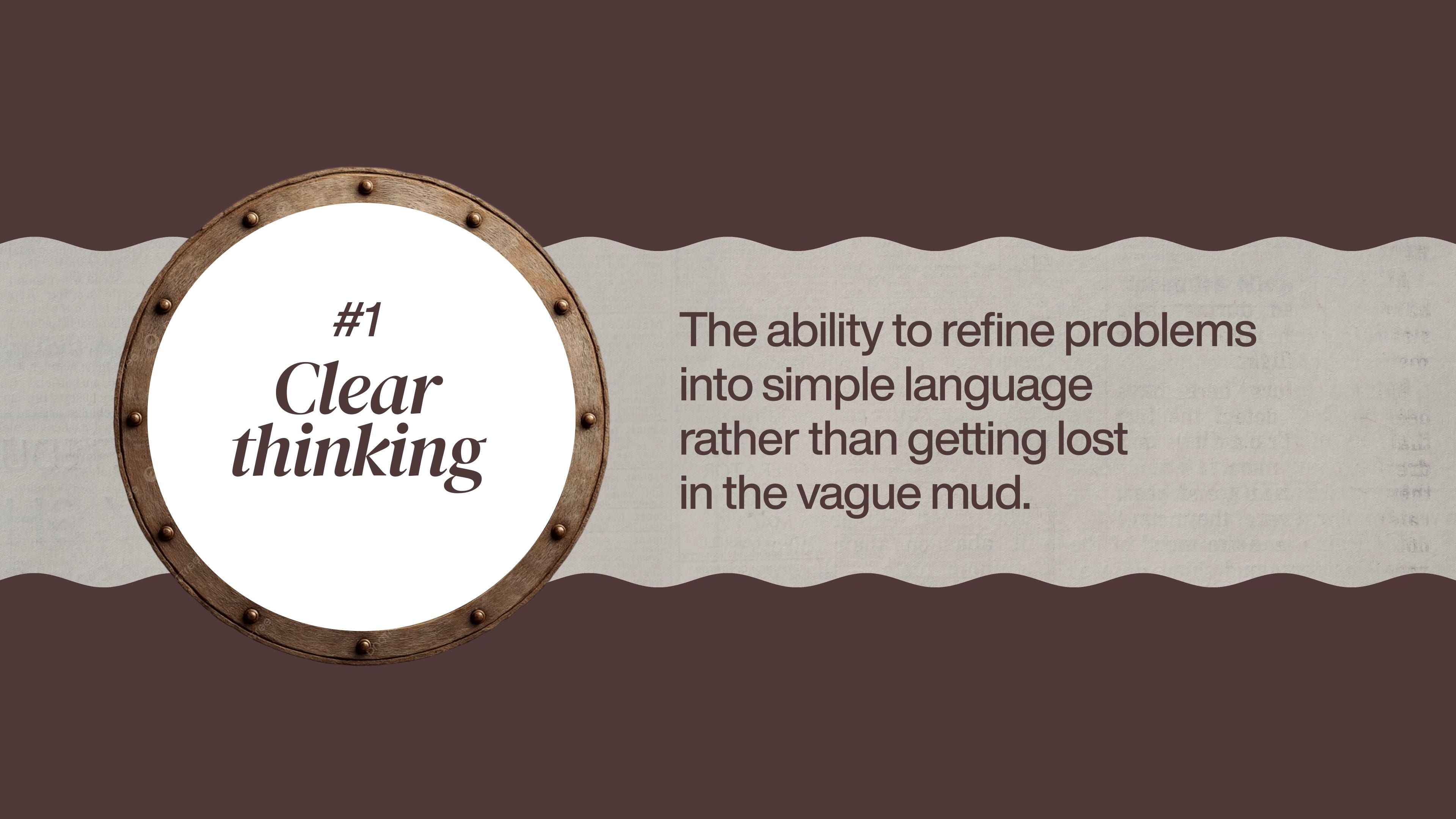
Clear Thinking
The first wheel is the ability to refine problems into simple language rather than getting lost in vague mud.
High agency individuals avoid this “Vague Trap” by moving thoughts out of their heads and onto paper, or a spreadsheet, or anywhere to filter out unclear ideas. Without clear thinking, a person may be energetic and rebellious but will likely charge ahead with a bad plan. This wheel of the tricycle allows one to deconstruct complex systems.
There was once a young truck driver who dreamed of making films, but he couldn’t afford to send himself to film school. When done with his trucking shift, he’d go down to the USC library. He’d gather as much material as he could from students’ dissertations, remove the staples, and photocopy all the pages. For six months, he gave himself a world-class education in cinematography and visual effects from the top film school in the country, all while driving his truck.
This young man’s name was James Cameron. You might know him from movies like The Titanic or Avatar.
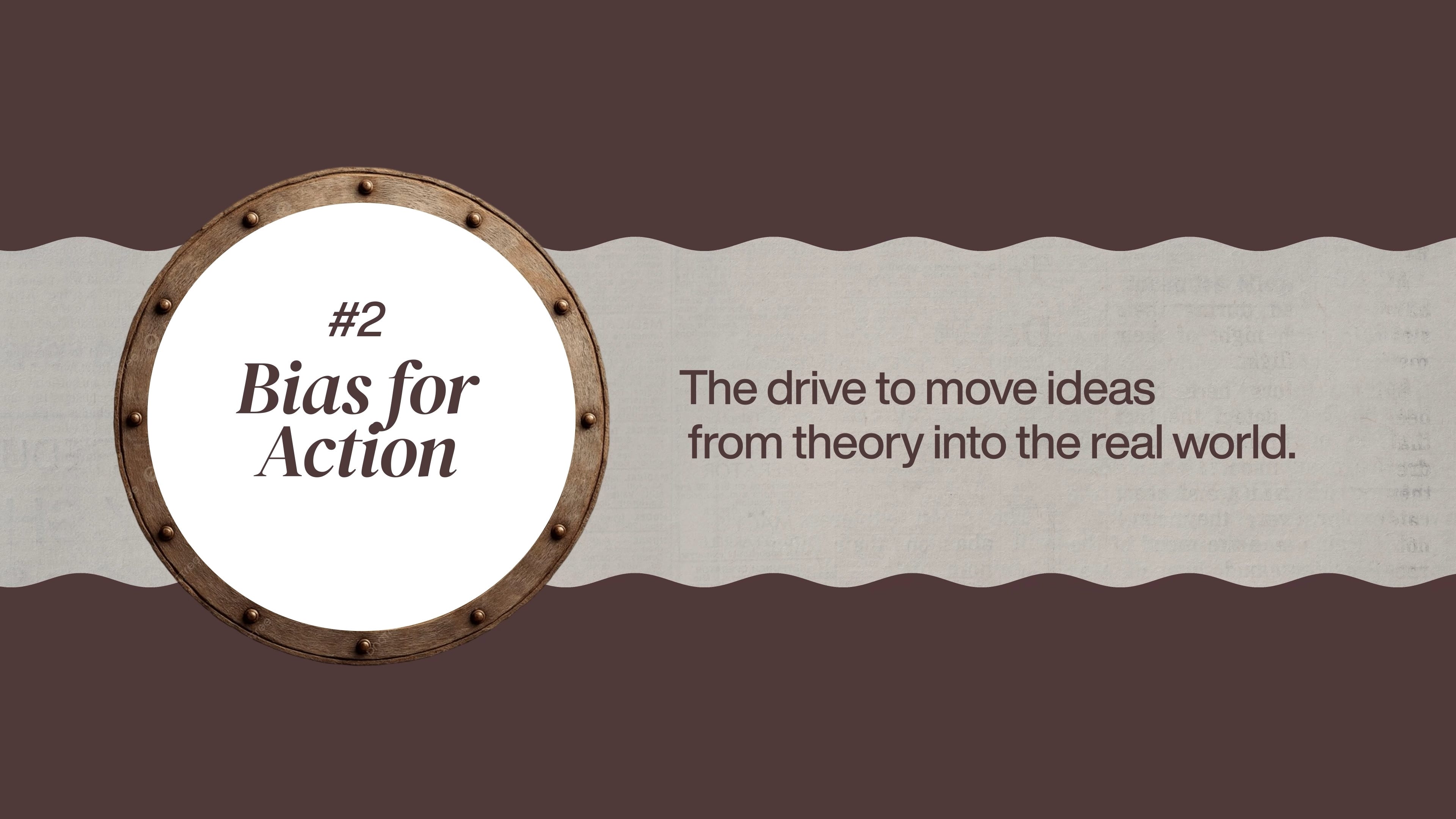
Bias for Action
The second wheel is the drive to move ideas from theory into the real world. To get the plans out of the group chat, as they say.
Individuals who lack this wheel remain stuck in the “Rumination Trap,” being stuck in never-ending loops of ‘what if it goes wrong? Rumination should be viewed as the smoke alarm for action. This is often where stress stems from.
If you catch yourself ruminating, ask How can I take action on this? Once you do this a few times, it becomes a habit.
To power this wheel of the tricycle, high agency people reframe decisions as experiments; the goal is not a “perfect” choice, but rather testing a hypothesis to collect practical data. They find the smallest possible step to create immediate momentum.
If the hypothesis is correct, great. Move on to the next step. If the hypothesis fails, that’s okay. Cross that one off your list, and try the next one. Your next hypothesis will probably be better because you have new information from the failure of your first hypothesis.
Remember, action produces information.
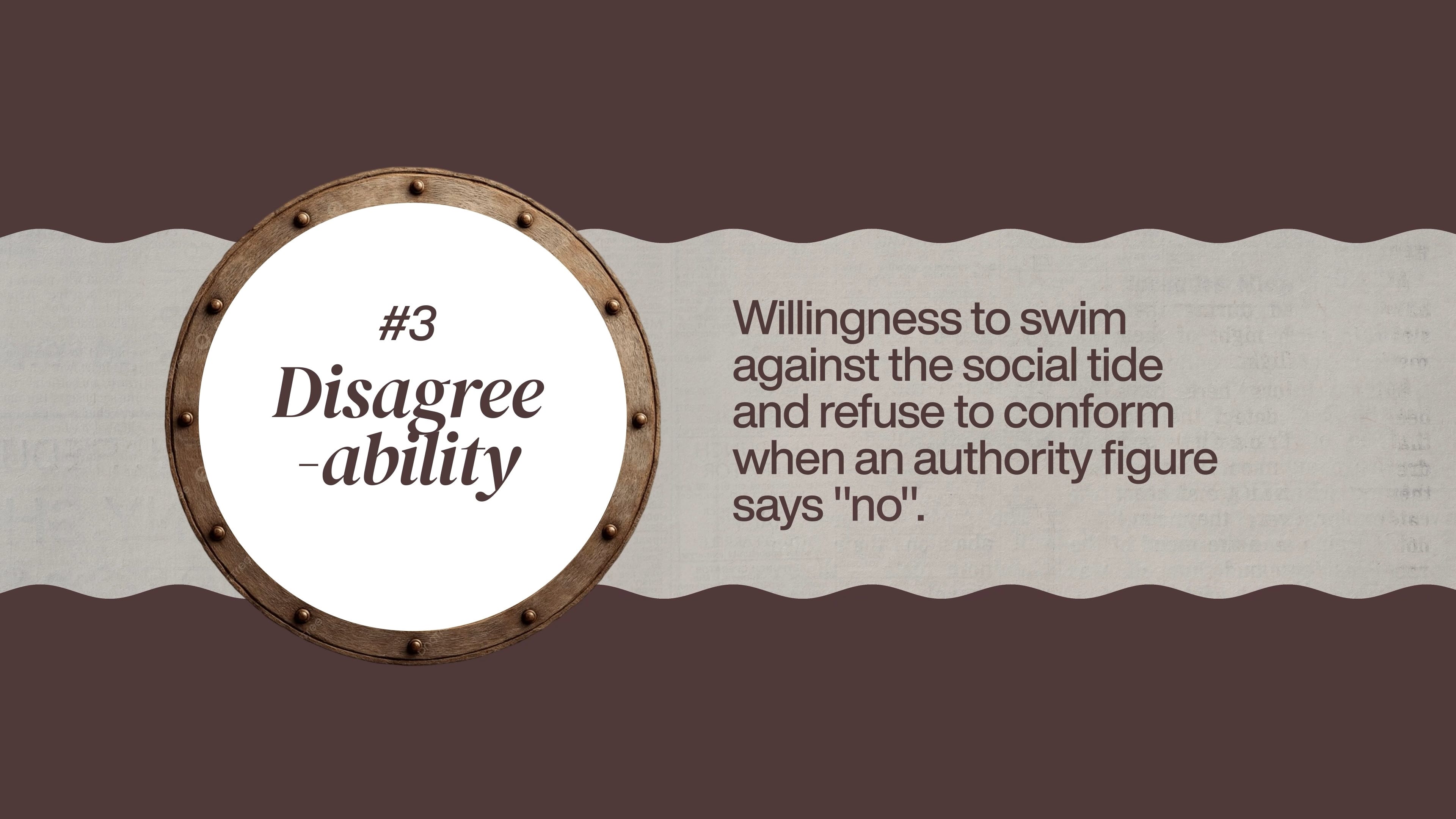
Disagreeability
The third wheel of the tricycle is the willingness to swim against the social tide and refuse to conform when an authority figure says “no”. Without this wheel, a person will quit as soon as they encounter social friction or an official “no” from a gatekeeper.
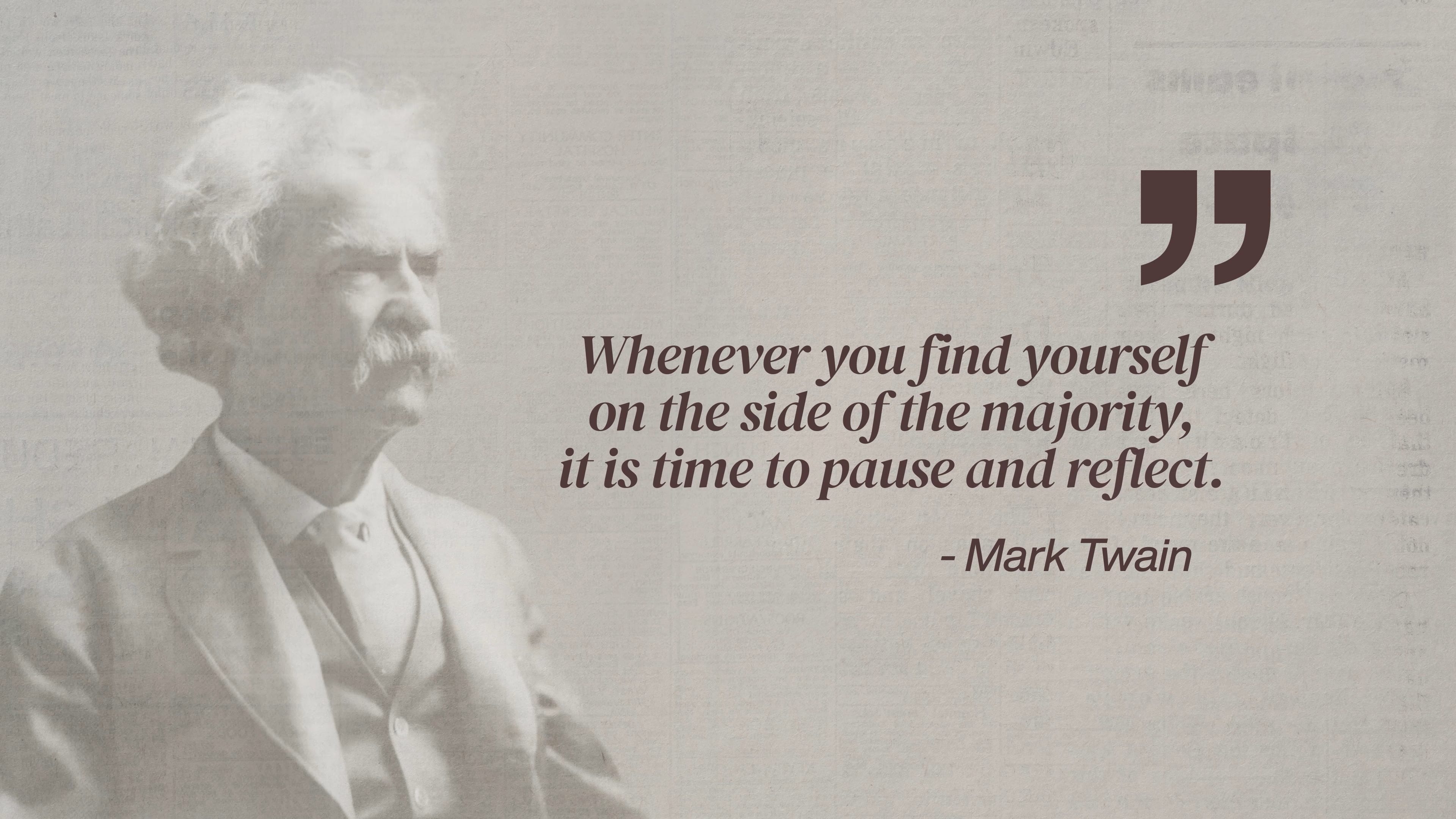
Disagreeability allows an individual to ignore the window of acceptable public opinion and resist conformity, where people falsify their own beliefs just to fit in with a group.
High agency individuals understand that while normal behavior is safe and liked by the tribe in the short term, it’s not where problems get solved. If normal behavior and thinking were the answer, the problem would have been solved long ago.
The Tricycle in Practice
Now let’s go back to our jail cell analogy. That person that you chose to call represents high agency because they possess the Clear Thinking to devise a plan, the Action Bias to actually come save you, and the Disagreeability to ignore the laws or social pressures that say the task is impossible.
Eric Weinstein says for a high agency person, being told something is impossible is not the end of a conversation, but the start of a second internal dialogue on how to get around the obstacle.
High agency is the profound realization that the future is not a fixed entity you are destined to occupy, but a landscape waiting to be shaped by your own hand. It’s the spark that forces you to find the creative back door that others simply cannot see. It is the mental toughness to swim away from the safe shore of consensus, and to decide that you will act as the most effective agent for your own life rather than a passive observer.
Extreme optimism and pessimism are often merely excuses for laziness. High agency is the courageous middle ground where human action—and only human action—dictates the course of history.
This video was heavily inspired by the essay High Agency In 30 Minutes by George Mack. It’s a fantastic guide to start cultivating high agency. Let me know how you are cultivating high agency in your life.
- Dante
My Products
The Sunday Systems Weekly Planner (Free)
My Socials
YouTube. LinkedIn. Instagram. X
I enjoyed reading the written word. However, you’re a beautiful video presentation really brought it to life. You did such an excellent job.