


By now, you’ve learned that regardless of hard work, systems are the underlying structures that determine our results. When we understand the mental models that govern these systems, we can use them to accelerate growth without extra effort. In today’s post, we’re breaking down 4 more mental models from Shane Parrish’s The Great Mental Models Vol. 3
Churn
Churn is the ongoing process where components within a system are used up, worn out, or replaced. It is a fundamental reality for any system, as they do not typically fail all at once; instead, they decay and eventually stall as parts wear out, people leave, and information degrades.
The Ubiquity of Churn
Churn is an ever-present force across various domains:
Physical and Biological: Mechanical parts in a car eventually break down, and human skin cells are constantly being replaced.
Business (Customers): Churn refers to the loss of customers. Because no business can retain a customer forever, the rate of churn serves as a key metric for how well a product fits its market.
Business (Employees): This involves employee retention and turnover.
Churn as a Metric for Growth
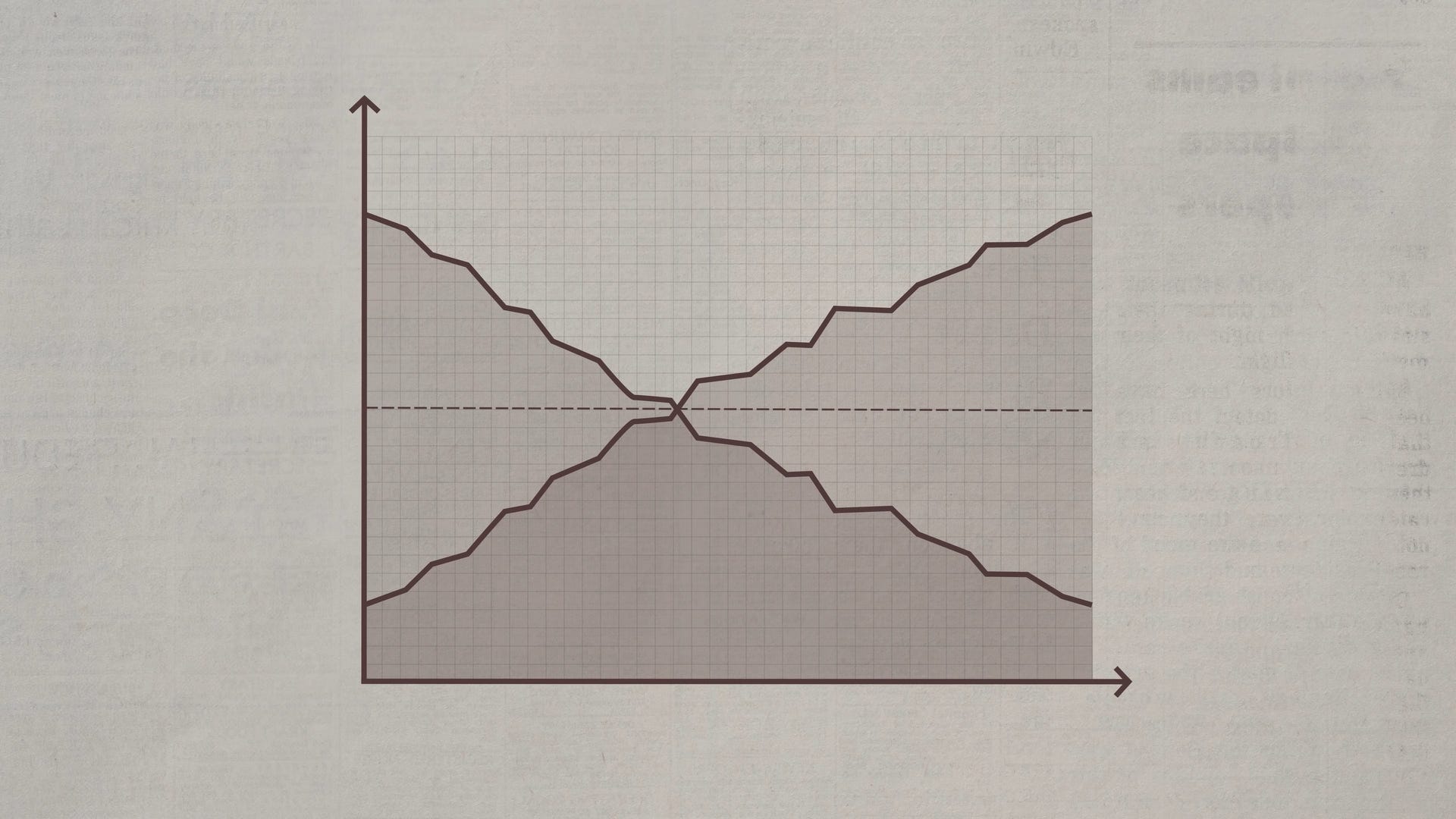
In business, focusing solely on growth can be misleading if churn is not accounted for. If a company is losing customers at the same rate it is gaining new ones, it is effectively “running in place” rather than achieving true progress. High churn rates are often influenced by factors like product satisfaction and the cost of switching to a competitor.
Fresh Blood
While many organizations strive for low employee churn to avoid high hiring and training costs, some leaders view high churn as a strategic advantage. For example, at Tesla, Elon Musk embraces churn as a way to bring in “fresh blood.” This philosophy suggests that:
New employees arrive without “legacy assumptions” or bad habits.
High churn prevents a system from settling into a “complacent equilibrium”.
Constant turnover can keep an organization “intellectually young”.
Structural Churn in Governance
The United States government provides a clear example of how systems can be designed with different churn rates for specific functional goals:

Low Churn (Supreme Court): Lifetime appointments minimize churn to ensure legal continuity and provide insulation from short-term political cycles.

High/Forced Churn (The President): The presidency is capped at two four-year terms to prevent the consolidation of power, intentionally forcing churn at the highest level of leadership.
Ultimately, keeping a system functioning well requires meticulous attention to the replenishment of its parts. By understanding the specific churn dynamics of a situation, you can better harness the forces that drive or decay that system.
Algorithms
Algorithms are the fundamental “recipes” that drive a system. They consist of a set of rules or instructions that, when followed precisely, turn specific inputs into predictable outputs. While some algorithms are static, the most powerful ones are capable of learning and evolving over time, creating a reinforcing feedback loop that allows the system to improve its own performance.
The Industrialization of Discovery: The Bayer Case Study
The power of a systemic algorithm is best illustrated by the pharma company Bayer’s development of the first broad-spectrum antibiotic after World War I. While scientists understood how infections worked, they lacked a reliable way to stop them once they began.
Bayer’s head of research realized that the traditional approach—relying on the individual genius of scientists—lacked the necessary scale. Instead, he developed an industrial testing system based on a repeatable algorithmic process:

The Recipe: Every chemical compound “candidate” was put through an identical testing and evaluation process.
The Rigor: Each chemical was tested against a panel of the most deadly bacteria (such as staph, e. coli, and strep) in both test tubes and living animals.
The Outcome: After years of following this “recipe,” they discovered KL 695. Interestingly, they didn’t initially understand how it worked—only that the algorithm had resulted in a test subject (a mouse) that recovered from infection.
Refining the Process
The true value of an algorithm lies in its ability to be refined. Once Bayer found a successful result with KL 695, they used those insights to update their testing “recipe,” which significantly increased the pace at which they discovered new meaningful results.
Key Takeaways for Systemic Progress
Correct Processes Over Correct Inputs: Having the right algorithm is often more important than starting with the right inputs. A repeatable process allows you to test various potential inputs and use the results to further hone the system.
Efficiency without Extra Effort: When the underlying rules of a system improve, progress accelerates without requiring a corresponding increase in manual effort.
Predictability: Algorithms transform the uncertainty of discovery into a structured path toward a predictable outcome.
Understanding these “recipes” is essential for navigating the future, as they represent the instructions that govern both our technology and our biological responses.
Critical Mass
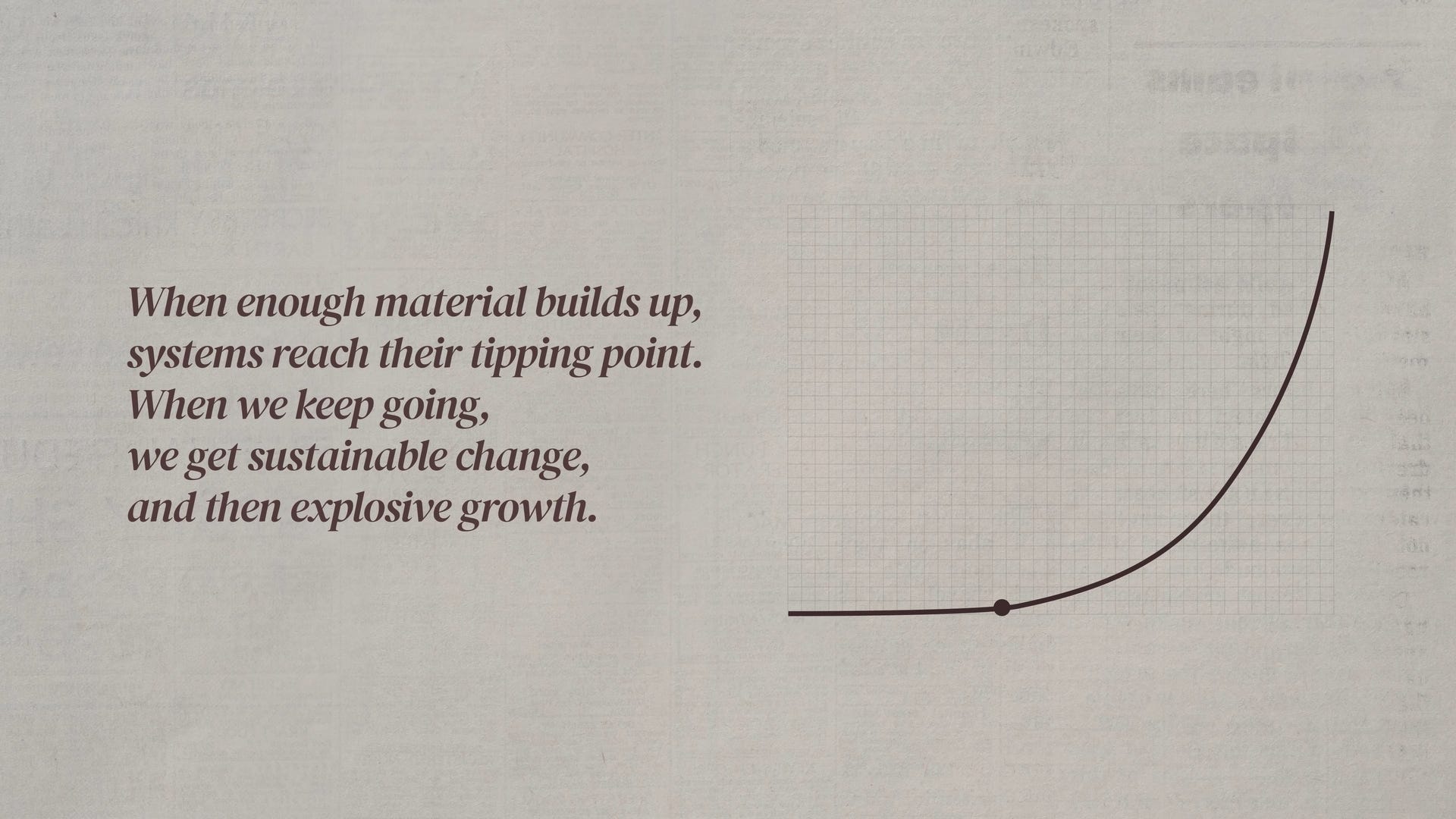
Critical Mass represents the tipping point where a system is on the verge of changing from one state to another. It is characterized by long periods of apparent inactivity followed by explosive, non-linear growth.
The Last Straw
A common way to visualize critical mass is through the phrase “the straw that broke the camel’s back”. In this analogy, the final unit of impact—the last piece of straw—is no heavier or more significant than any piece that came before it. However, because the system was already loaded to its limit, that one additional unit causes the total weight to cross the threshold, resulting in a dramatic state change (the breaking of the back).
Real-World Thresholds
Critical mass manifests in various physical, social, and economic systems:
Physical States (Water Boiling): The difference between 210 and 211 degrees Fahrenheit is incremental and produces little visible change. However, the difference between 211 and 212 degrees is huge, as that single degree of difference is the threshold where water transforms from a liquid to a gas.
Social Systems and Beliefs: Changing a social system does not require convincing every single person. Once a specific threshold of adoption is reached, the change begins to perpetuate itself and becomes self-sustaining.
Business and Products: A product achieves critical mass when its user base grows to a point where further growth is driven by the system itself rather than external effort.
The Illusion of “Overnight Success”
The concept of critical mass explains why many major breakthroughs appear to happen “overnight” when they are actually the result of a long, invisible buildup.
Progress appears to move slowly, and then all at once. The tipping point or “last straw” is what is most visible to the outside world, not the work leading up to it. It is a mistake to focus only on the tipping point itself. The “last straw” only works because of the massive amount of “straw” that was already painstakingly piled on before it.
Strategic Application
Understanding critical mass allows you to move beyond simply working harder. By identifying the requirements for a tipping point, you can:
Identify High-Leverage Targets: You can determine which specific parts of a system to target to advance change more quickly.
Shift the Whole Through the Part: Changing just one or a few key components can sometimes be enough to shift an entire system into a new state.
Manage Expectations: Recognizing that life is non-linear helps in maintaining the patience required during the “slow” period before the explosive growth begins.
The Law of Diminishing Returns
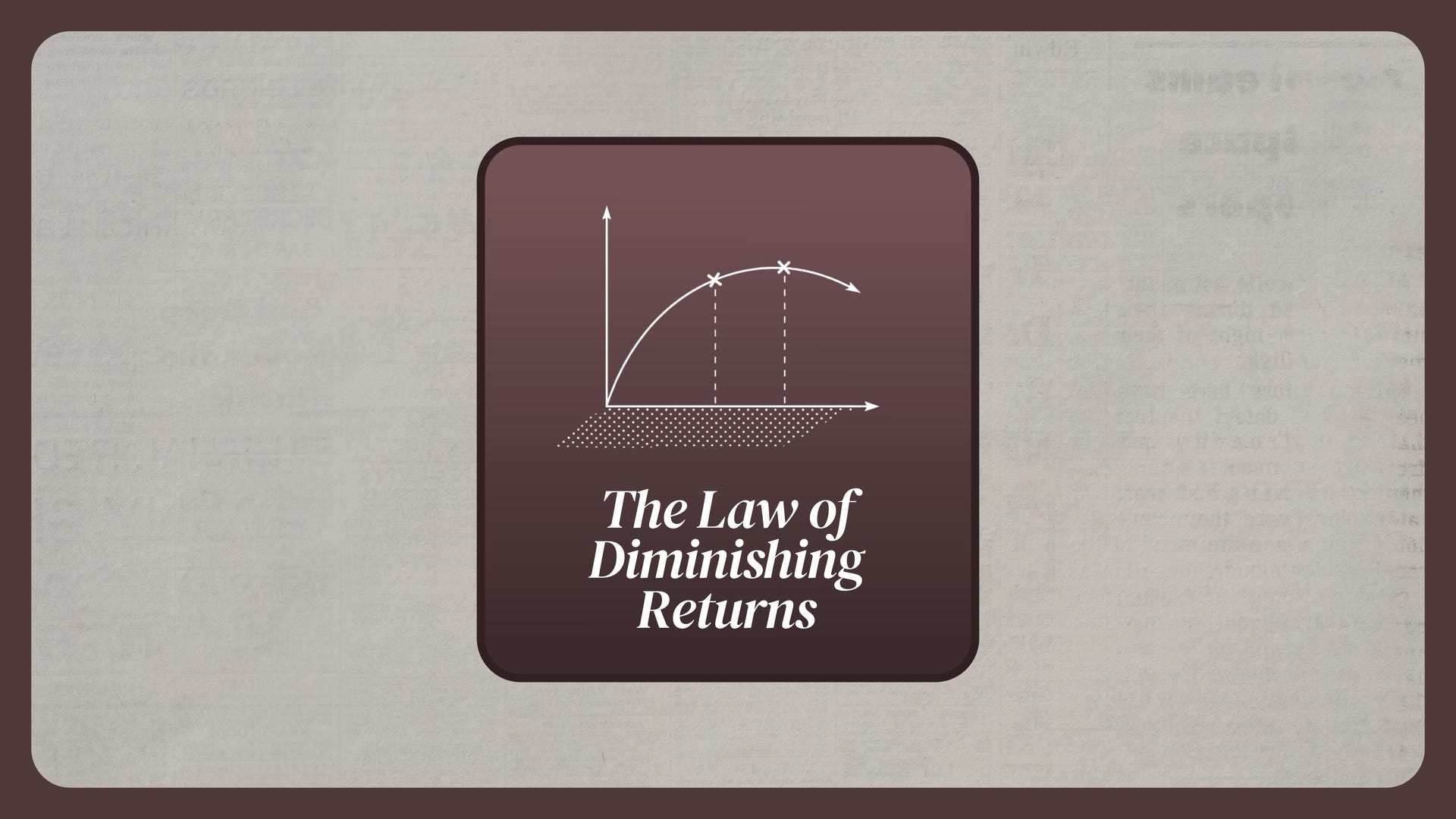
The Law of Diminishing Returns is a fundamental principle governing how systems respond to effort. While we often expect a linear relationship—where doubling our input doubles our output—the real world rarely works this way. Instead, this law teaches us that as you continue to add resources, time, or effort to a system, the impact of each additional unit eventually begins to decrease.
The Linearity Illusion
In a closed system, the law of conservation of mass suggests that inputs and outputs remain equal. However, in the “real world” of calculating value, systems are almost never closed. This leads to the Linearity Illusion: the mistaken belief that outcomes will always scale directly with effort. In reality, not all inputs to a system are equal, and the value gained from the first unit of effort is often much higher than the value gained from the hundredth.
Real-World Examples of Diminishing Returns
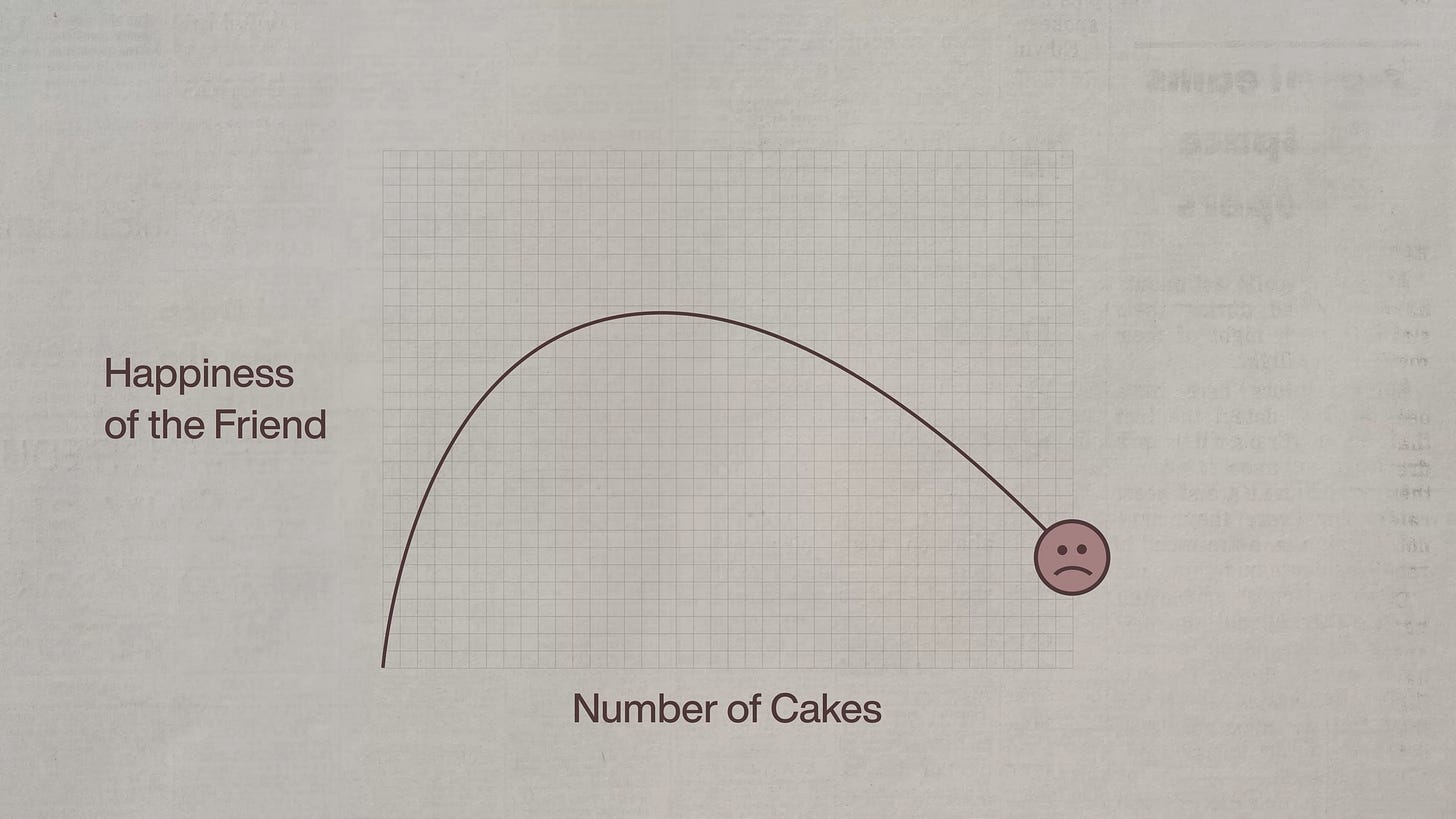
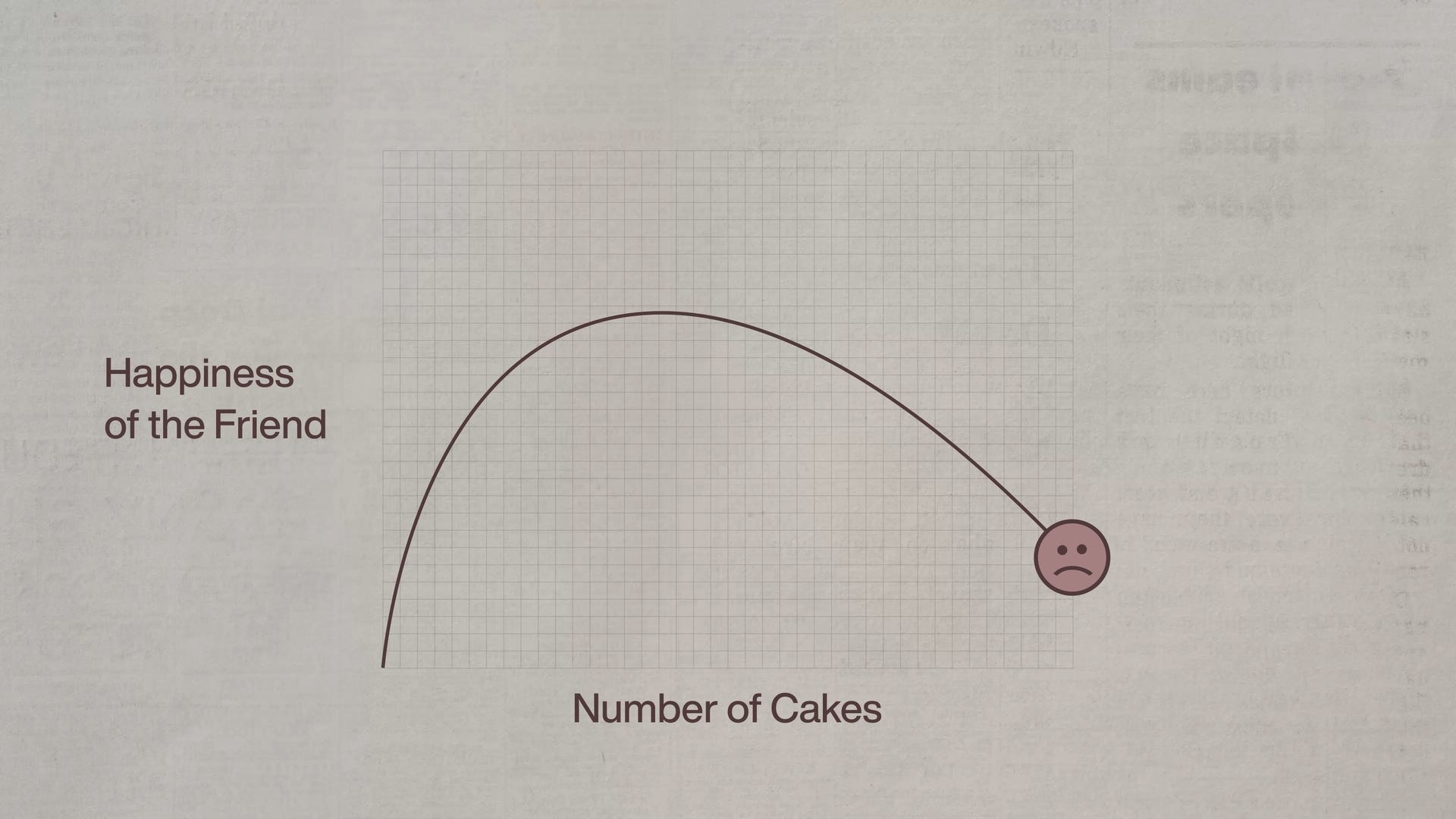
Social Value (The Birthday Cake): If you bake one cake for a friend, they are happy. If you bake two, they aren’t necessarily twice as happy. By the time you bake four cakes, the effort becomes a burden because the friend now faces the inconvenience of storing leftovers, which may actually offset the initial happiness.
Organizational Scaling: Adding a single employee to a three-person company can drastically increase total output. However, adding one more person to a team of 600 will likely have a lesser impact on the overall system.
Skill Mastery: It is generally easier to go from “bad to good” than from “good to great”. For a beginner, every new piece of information has a visible impact on their skill. For an expert, progress becomes incremental, requiring significantly more work to achieve even a tiny improvement.
Optimization Becomes a “Waste of Time”
A critical takeaway of this mental model is recognizing the point where optimization becomes a liability. The more you optimize a system, the harder it becomes to “eke out” additional improvements.
Think of squeezing a lemon:
The first squeeze produces the most juice.
The second squeeze produces some.
By the fifth squeeze, you are essentially wasting your time for a few drops.
“Is the Juice Worth the Squeeze?”
The core challenge for anyone managing a system is calculating where the point of diminishing returns begins. Understanding this law helps you decide when to stop optimizing one area and move your resources to a different area where the “first squeeze” will yield more significant results. Successful progress isn’t just about working harder; it’s about recognizing when your current path has reached a point of trivial benefits rather than meaningful gains.
Ultimately, true progress is not born of raw effort alone but through the intentional design and management of the systems that surround us. You can understand these systems better by learning the mental models that provide the architecture necessary to navigate them.
Mental models are tools used by polymaths to win the long game. If you want to dive deeper, I highly recommend checking out the book that this post is based on, Shane Parrish’s The Great Mental Models Vol. 3
Which of these systems are you currently working on? Let me know in the comments!
- Dante
By the way, this post only covered a few of the mental models in this book. I have another post that breaks down 4 more!
My Products
The Sunday Systems Weekly Planner (Free)
My Socials
YouTube. LinkedIn. Instagram. X