


Every now and then, you come across an idea that feels… strangely universal. Something you see across entrepreneurs, athletes, and presidents; people who live completely different lives, yet operate from the same internal compass.
That’s what happened to me this week.
I was watching three separate clips: one of Elon Musk, one of Barack Obama, and one of Kobe Bryant. Totally different worlds. Totally different personalities. But they were all saying something that rhymed.
So I want to share the through-line with you, because it’s one of my favorite mental models, and one that I’m trying to make a habit of.
Elon Musk: “Be Useful.”
A while back, Sam Altman asked Elon what he thought people should focus on if they want to make an impact.
Elon didn’t talk about passion, credentials, or choosing the “right” career lane.
He said:
Be useful.
And then he gave this surprisingly simple formula:
Usefulness = (Amount of Utility) × (Number of People)
That’s it.
A big improvement for a small group? Useful.
A tiny improvement for millions? Also useful.
When you hear it framed that way, it suddenly makes sense why he dropped out of Stanford after two days. He felt like he could build more useful things right now than he could by sitting in a classroom for six years.
“You can get a doctorate on many things that ultimately do not have a practical bearing on the world.”
Whether or not you agree with his choices, the clarity behind them is hard to ignore.
Barack Obama: “Just get stuff done.”
In an interview years after leaving office, Obama was asked what advice he’d give young people starting their careers.
His response:
“Just learn how to get stuff done.”
He talked about brilliant people who could analyze a problem from every angle… but never actually solve it.
And then he talked about the people he depended on—the ones who said:
“I’ll take care of that.”
We all know someone like that. They are dependable and actively take things off your plate. He notes that people in your organization will recognize this immediately.
Kobe Bryant: “Stack small advantages.”
Then there’s Kobe.
His explanation of why he trained at 4 AM is one of the clearest real-world examples of compound interest I’ve ever seen.
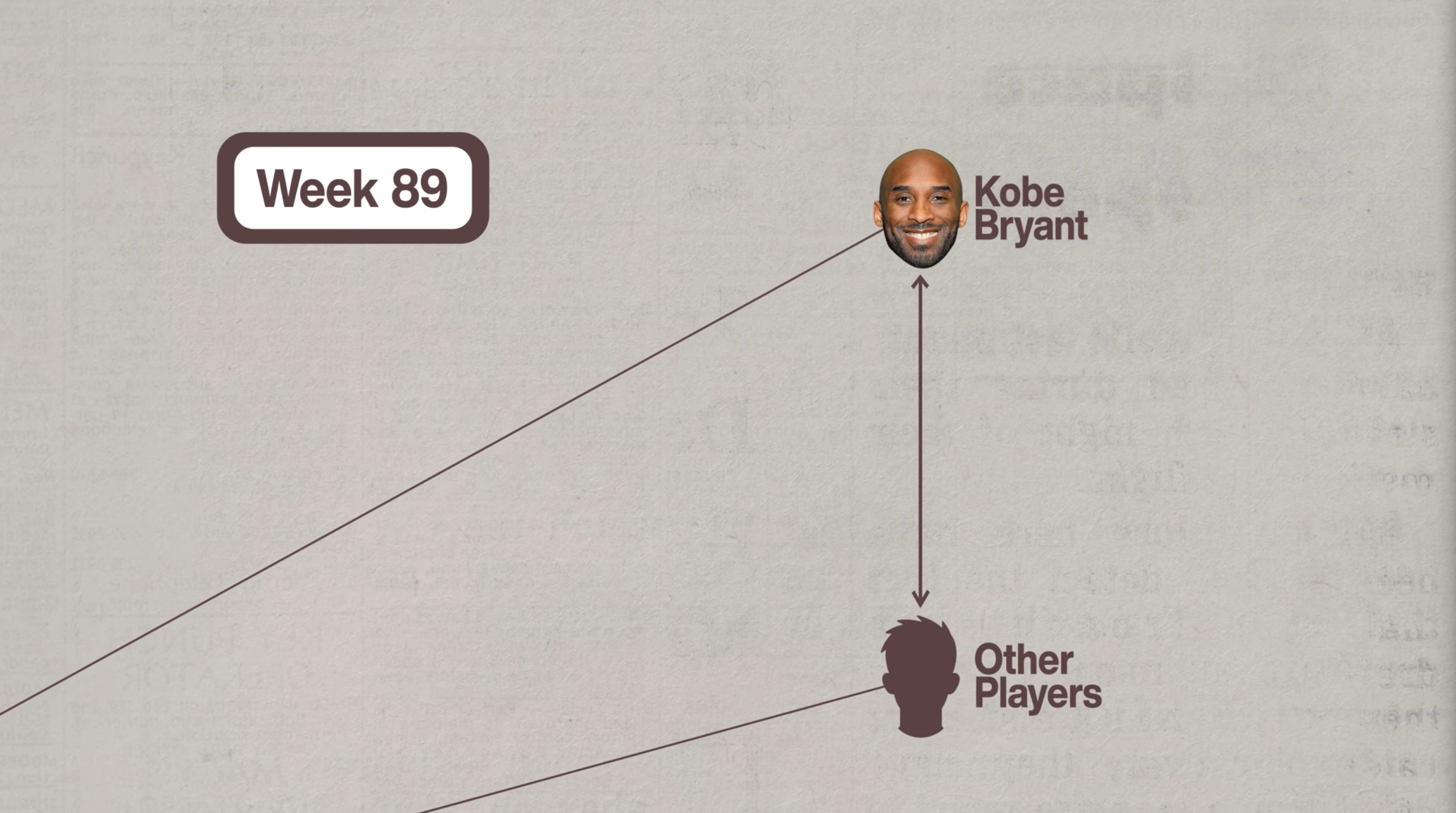
While other players got in two workouts a day, he got four, because he started earlier.
He said that after a few years of doing this, the skill gap became so large that it didn’t matter how much work his opponents did in the summer; they could never catch up.
The part that hits me hardest is how calm he was about it. It wasn’t about proving anything. It was:
“If I do more reps than you for long enough… the outcome is inevitable.”
His edge didn’t come from talent or strategy. It was a sheer commitment to practicing the fundamentals with extremely high volume.
The Thread
What ties these three together is first principles thinking, the practice of stripping a belief down to its most fundamental truths, beginning with the laws of physics. We often inherit our beliefs and assumptions. But Elon, Obama, and Kobe don’t start from what others say is important. They start from the fundamental truths, and reason up from there.
Elon reduces an entire career outlook to one question: How can I be useful? Not prestigious. Not optimized for status. Not “what someone like me is supposed to do.” Just: Does this meaningfully improve something for someone? Once he finds the core truth, every decision stacks neatly on top of it.
Obama does the same thing with leadership. Strip away politics, ego, and ivy league analysis, and you’re left with the definition of all progress: things getting done. Execution is the measure of impact. He ignores the noise and evaluates people by the simplest, hardest metric: Do they actually move the needle?
Kobe applied first principles to mastery of his craft. Instead of trying to get an edge over his opponents through new medicine or game strategy, he decided to beat them on pure fundamentals. He identified the one variable that compounds: reps. More deliberate practice → better skills → an ever-widening gap.
Three completely different worlds, but the same cognitive habit:
ignore inherited wisdom, break the problem down to its core truths, and rebuild from the foundation up. That’s the through-line behind their success. They return to the tree while everyone else argues about the branches.
If you enjoyed this breakdown, I made a full video unpacking these ideas with visuals and examples.
I also covered the first Great Mental Models book in a video that’s now crossed 270,000 views.

Get my Sunday Systems Worksheet (free download)
I guarantee you’ll get 50% more done in a week