


The greatest athletes of all time didn’t reach the top by following the same training advice as everyone else. While their competitors obsessed over physical training, these legends gained their edge through superior mindsets.
After studying their stories, a few mantras have emerged. Here are five of them.
Tiger Woods
Never Let Success Make You Soft
April 1997, Augusta National. A 21-year-old Tiger Woods didn’t just win the Masters — he destroyed the field. He led after every round, finishing at a record 18-under par, and won by 12 strokes.
That’s like winning a marathon and finishing more than two miles ahead of second place.
To the world, his game looked perfect. If it ain’t broke, don’t fix it, right?
Wrong. Tiger decided to reinvent his golf swing completely.
“People thought it was asinine for me to change my swing after I won the Masters by 12 shots… Why would you want to change that? Well, I thought I could become better.” - Tiger Woods
No other elite golfer had ever attempted such a radical structural overhaul.
There is this notion that every person has a “born,” or “natural,” swing. Among gifted players, this notion is especially powerful. So much so that to meddle with your natural swing is to meddle with your soul -- to dive too deep and risk discovering things about yourself that maybe you’d rather not. - ESPN
But Tiger decided the swing that just produced one of the most dominant performances in golf history wasn’t good enough for him. He looked at it and saw flaws. He was going to tear it down and rebuild it.
In the book The Big Miss, Tiger’s coach Hank Haney wrote:
“He wanted to always be consciously doing something to get better. It was as if he needed the stimulation and the challenge to stay motivated.”
Haney describes it as a compulsion.
“In his mind, satisfaction is the enemy of success. His whole approach was to delay gratification and somehow stay hungry.”
So even when he was on top of the world, Tiger wasn’t interested in protecting what he had. He was obsessed with what he could have.
Kobe Bryant
Never Get Bored With the Basics
One of the most powerful stories that reveals Kobe’s mindset comes from performance coach Alan Stein Jr.
Back in 2007, Stein was brought in to work at Kobe Bryant’s Nike Skills Academy. He asked Kobe if he could observe one of his private workouts. Kobe casually replied, “Sure. We start at 4 a.m.”
Stein, wanting to impress the superstar, decided to show up early, at 3:30 a.m, thinking he’d beat Kobe there and prove his own dedication.
He walked into the gym… and heard the ball already bouncing.
Kobe was already in a full sweat, going through an intense warm-up before the “official” workout even began.
What happened next shocked Stein even more. The workout wasn’t filled with flashy moves or advanced techniques. Kobe spent the next couple of hours on basic drills — the kind you’d see junior high kids doing. Footwork. Form shooting. Basic fundamentals executed with maniacal intensity and precision.
Stein couldn’t help himself. He asked Kobe: “Why are you doing such basic drills?”
Kobe’s response became legendary:
“I never get bored with the basics.”
He didn’t care about learning new, complex moves. Instead, his approach was about obsessing over the simple things and doing them better than anyone else on Earth. This became known as the Mamba Mentality.
In The Mamba Mentality book, Kobe said
“The mindset isn’t about seeking a result — it’s more about the process of getting to that result. It’s about the journey and the approach. It’s a way of life.”
He was a super process-oriented guy. He engineered volume into his schedule in a way that created a widening gap with his competition.
He chose to start his workouts at 4 a.m. for a very mathematical reason: it allowed him to fit in four full training sessions per day instead of the usual two that most players managed.
Wake up at 3
Train 4–6
Come home, eat, relax.
Train 9–11
Then again 2–4.
Then again 7–9.
He focused on the process, not the outcome.
Michael Phelps
Negative Visualization
It’s the final of the men’s 200-meter butterfly at the 2008 Beijing Olympics.
Michael Phelps dives in. The race of a lifetime is underway. He’s already won multiple golds that week and is chasing history.
Then, just 25 meters into the race, his goggles begin to leak. By the second turn, they are full of water. Phelps is swimming blind in the biggest race of his life with zero visibility. He can’t see the walls. He can’t see his competitors. He can’t even see the bottom of the pool.
But he didn’t panic.
He stayed calm, counted his strokes with precision, and powered through to touch the wall first — winning gold and setting a new world record in the process.
How did he do this? He used something called Negative Visualization.
Negative visualization goes all the way back to the ancient Stoics, who called this Premeditatio Malorum, which translates to the premeditation of evils. This is the practice of deliberately imagining worst-case scenarios so that when they arrive, they lose their power to destroy you.
Phelps explained it this way:
In Beijing, when the goggles actually filled with water, it wasn’t a shock. It was just another rehearsed scenario. Phelps knew exactly how many strokes he needed per lap. He executed the plan he had already practiced mentally.
The goggles story is the perfect embodiment of how the best athletes think: They don’t fear the worst. They rehearse it.
Tom Brady
You Don’t Have To Be Special
Tom Brady was never supposed to be here.
Drafted 199th overall in the sixth round, a skinny, unathletic-looking quarterback from Michigan with a slow release and no elite physical tools. Scouts questioned his arm strength, his mobility, his upside.
Yet he became the greatest quarterback of all time. Seven Super Bowl rings. Two decades of dominance.
How? His answer is simple, and profound.
“The truth is you don’t have to be special. You just have to be what most people aren’t; consistent, determined, and willing to work for it. No shortcuts.” - Tom Brady
The perfect illustration of this principle came during Super Bowl 51. The New England Patriots were down 28-3 against the Atlanta Falcons, midway through the 3rd quarter. The largest deficit in Super Bowl history.
This edition of The Boston Globe was printed early when the New England Patriots were losing 21-0 in the first half. The editors assumed the game was over.
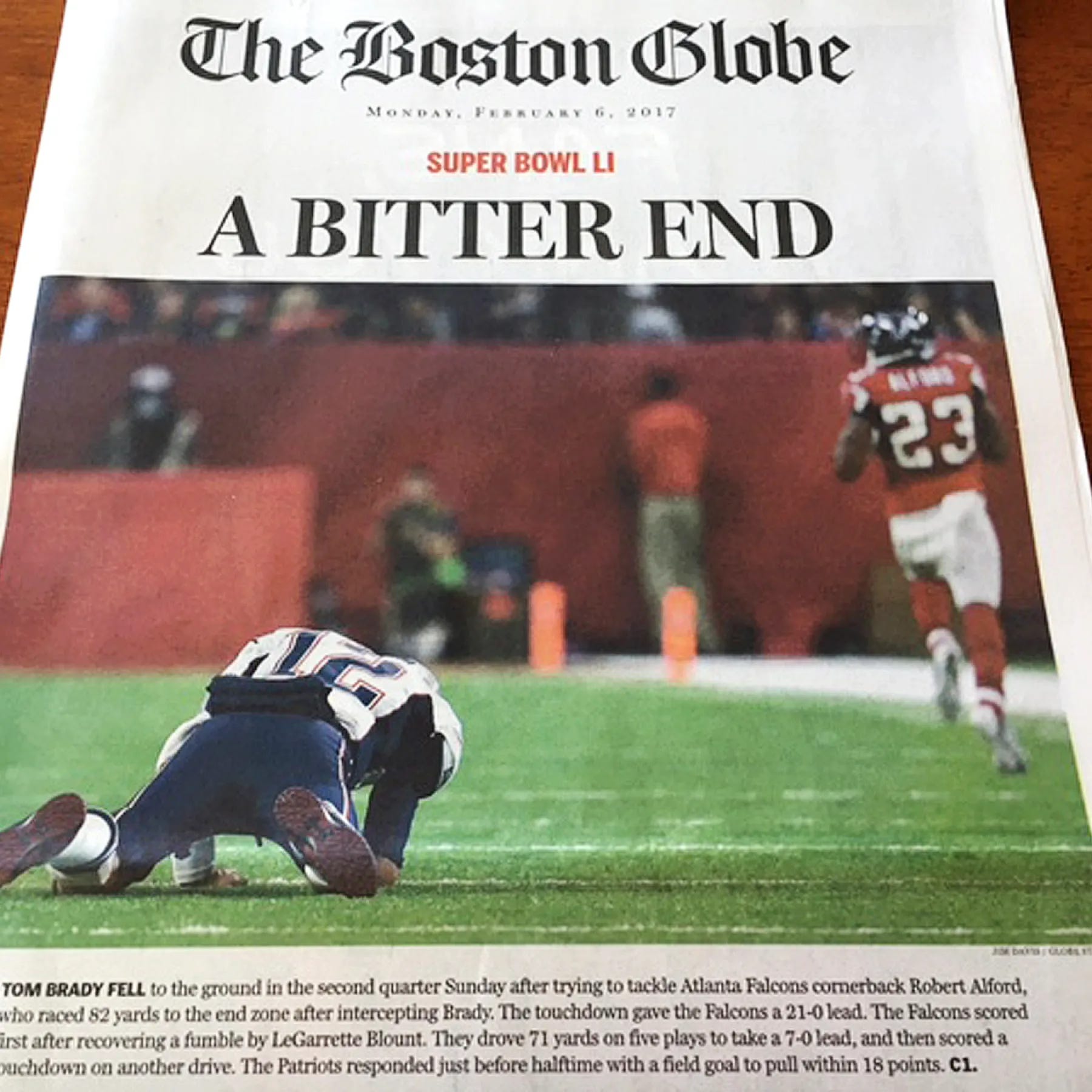
But the Patriots refused to accept the story everyone else was telling. Tom Brady led a historic comeback to win, making this 'A Bitter End' headline an instant collector's item.
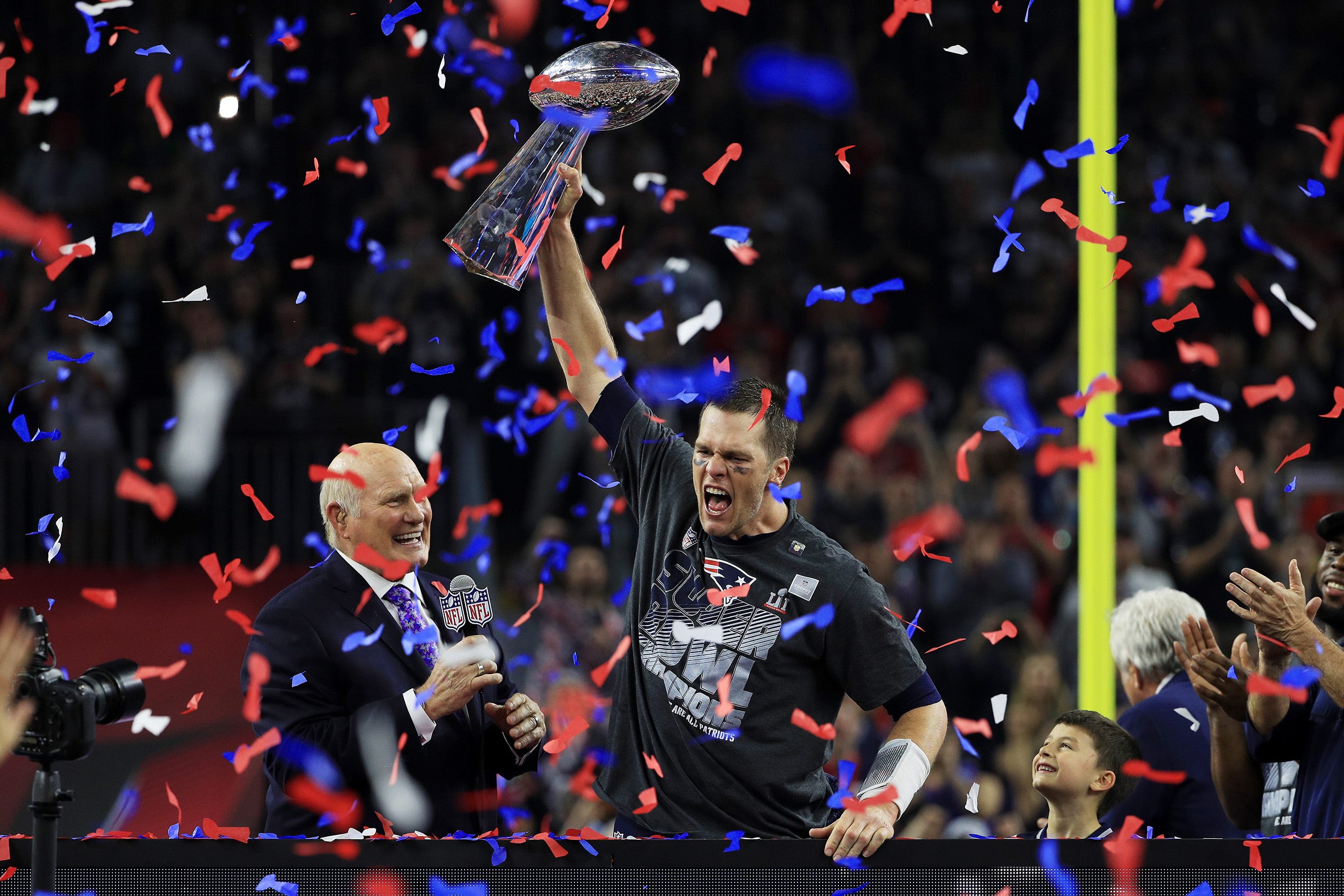
Consistent. Determined. And willing to work for it.
This wasn’t a one-time miracle. It was the culmination of a career built on the belief that you don’t need to be the most talented, the most athletic, the most gifted. You need to show up every single day, no matter the circumstances.
Roger Federer
It’s Only A Point
Early in his career, Roger Federer had a temper. He smashed rackets. He screamed at umpires.
His explosive emotions were derailing matches and threatening to destroy his career potential. Then came the turning point.
In 2001, at the Masters tournament in Hamburg, Federer lost a match he should have won. The loss hurt, but his own childish behavior afterward disgusted him even more.
That night, he made a deliberate decision: he was going to master his emotions.
He consulted a sports psychologist and worked at it for years. He trained himself to reset faster. He learned not to dwell on mistakes.
Years later, in a college commencement speech, he distilled the entire philosophy into one line.
“It’s only a point.”
He explained that in his career of over 1500 matches, he had won almost 80% of them. But of all the points that made up those matches, he’d only won 54%.
In other words, even top-ranked tennis players win barely more than half of the points they play.
Federer transformed from a temperamental player into an elegant champion who won 20 Grand Slams. He accepted imperfection, let go quickly, and moved on to the next point.
There is no secret ingredient

Tiger Woods’ coach had to stop bringing his video camera to tournaments because Tiger would just nitpick every swing that was recorded.
Michael Phelps visualized the worst-case scenario for every race.
Federer took a different path. Instead of fighting imperfection, he learned to accept it and release it faster. For him, the winning mental model was emotional detachment and rapid recovery. I included the Federer example for a reason, and that is to show that there is no single formula.
Some of the greats thrive on relentless dissatisfaction. Others on calm acceptance.
The common thread is the willingness to do the deep mental work required.
— Dante
P.S. For the full breakdown, watch the YouTube video.
Need a part 2 with Michael Jordan, Schumacher, Cristiano Ronaldo, Muhammad Ali and Rafael Nadal.
Would be really great if you do more like this