


If your current creative or professional struggle matches any of these, you are facing the most toxic force on the planet.
You feel a paralyzing fear or massive self-doubt regarding a specific project or calling.
You are trapped in a cycle of rationalization and procrastination, telling yourself you’ll “start tomorrow” while distracting yourself with cheap fixes like social media, personal drama, or the endless search for more support.
You are living a divided life—the life you currently lead versus the “unlived life” within you—and the gap between them is producing a low-grade misery that only disappears the moment you actually sit down to work.
In the following pages, we will go over the mental model of Resistance, how to “Turn Pro” to neutralize self-sabotage, and the daily rituals used by the world’s best creators to outsmart this internal foe and unlock their true potential.
Resistance
Resistance is defined as a universal, invisible, and internal force of self-sabotage that acts as a repelling energy field whenever one seeks to move from a lower sphere to a higher one. It serves as the primary barrier between the life we currently lead and the “unlived life” within us, which represents our untapped potential and unique destiny. Within this mental model, Resistance originates from the ego, which fears that an individual’s spiritual or creative evolution will put the ego’s material-based control “out of business”.
A key tenet of this model is that Resistance is infallible; it acts as a compass pointing toward true north, which is the specific calling the force most wants to prevent us from pursuing. Therefore, the more fear and resistance one feels toward a specific endeavor, the more certain they can be that the endeavor is vital to the growth of their soul. Resistance manifests through various symptoms, most commonly procrastination, but also through self-doubt, perfectionism, addiction, victimhood, and the creation of “soap opera” drama in one’s personal life to avoid productive work. More on these later.
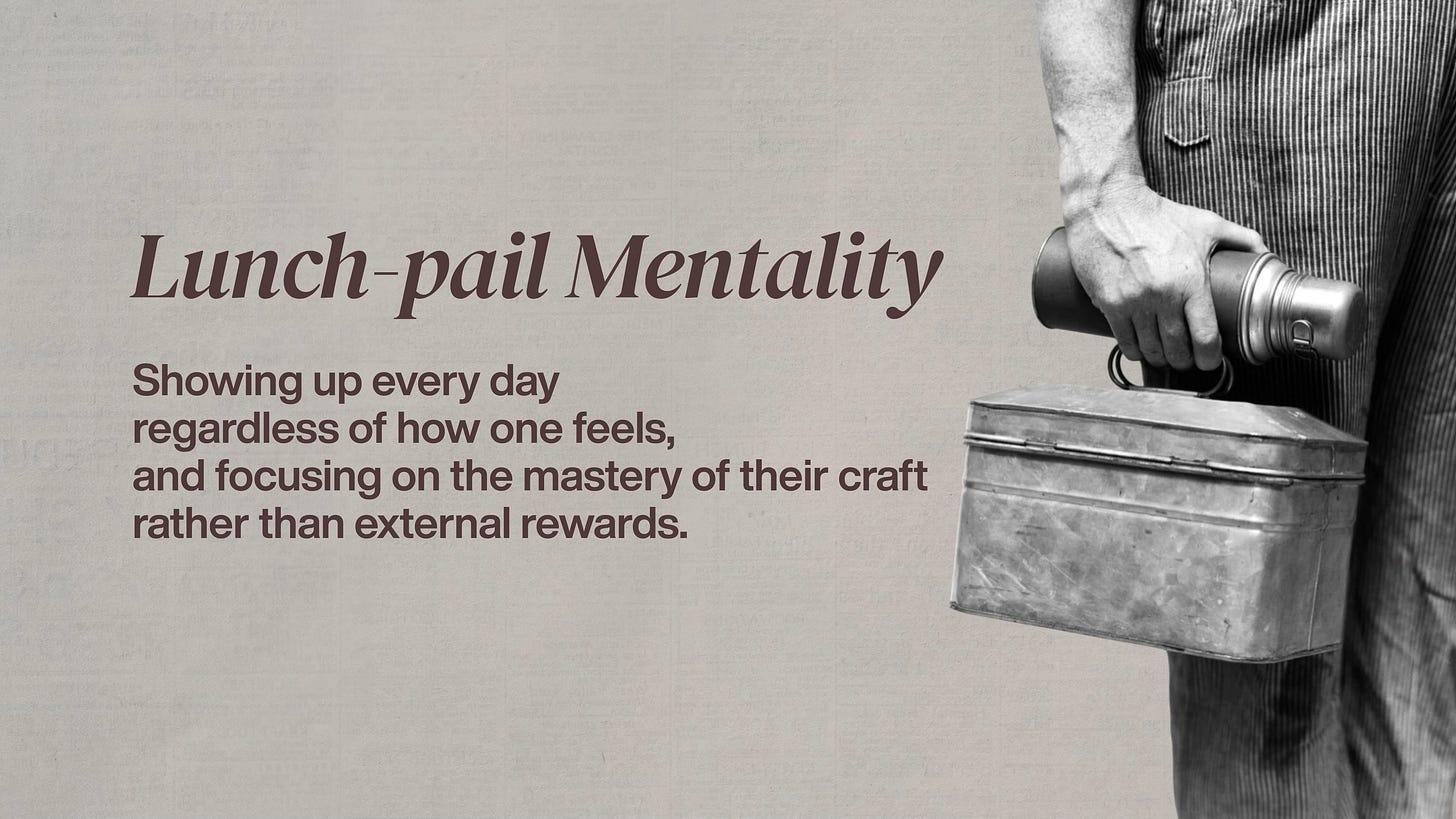
Because Resistance is a force of nature like gravity, it never fully disappears and must be fought anew every single day. The primary method for overcoming this force is the decision to “Turn Pro,” which means adopting a “lunch-pail mentality,” showing up every day regardless of how one feels, and focusing on the mastery of craft rather than external rewards.
The professional understands that the hardest part of any task is not the work itself, but the act of sitting down to begin. By performing the mundane physical act of starting, the professional creates an open space for “The Muse” to provide inspiration.
The Muse
The Muse is a divine force or a real, living entity that assists creators by bringing beauty and truth into the material world. While often personified, the Muse’s interventions manifest through sudden flashes of inspiration, meaningful dreams, and the discovery of one’s unique calling. Watch the clip below for just a minute to get an idea of what I’m talking about.
Ultimately, Resistance is a bully with no strength of its own; it derives all its power from our fear of it and often dissolves the moment we actually engage in the work.
Turning Pro
To “Turn Pro” against Resistance is to make a conscious decision and an act of will to move from an amateur’s mindset to that of a professional.
While the amateur plays for fun and pursues a calling as a sideline, the professional “plays for keeps” and treats their work as a vocation. This mental model involves adopting specific qualities and habits to neutralize the self-sabotaging power of Resistance:
The Professional’s Code of Conduct
Showing Up Every Day: The professional is there seven days a week, regardless of how they feel or whether inspiration has struck. They understand that by performing the mundane physical act of starting, they set in motion a sequence that produces inspiration.
The “Lunch Pail” Mentality: The professional views themselves as an infantryman or a day laborer. They wear “combat boots” and measure progress in yards of dirt extracted from the enemy, one minute at a time.
Playing Hurt: Unlike the amateur who folds when confronted with adversity, the professional plays through pain, sickness, and doubt. They follow the Marine Corps model, taking a perverse pride in being able to be miserable and still get the work done.
Accepting No Excuses: The professional recognizes that Resistance is like a telemarketer; if you say hello, you’re finished. They do not pick up the phone or allow “legitimate” justifications, like a family crisis or illness, to keep them from their work.
Mastery of Craft vs. Preoccupation with Mystery
A key part of turning pro is demystifying the work. While the amateur over-glorifies the “mystery” of art and is paralyzed by its holiness, the professional views their work as a craft. They concentrate on technique and “how,” leaving the “what” and “why” to the Muse. By toiling beside the front door of technique, they leave the back door open for genius to enter.
Me, Inc.
Pressfield suggests that professionals should view themselves as a corporation. This separation creates a healthy distance between the will and consciousness running the show and the artist doing the work.
Separation from the “Instrument”: The professional stands at an arm’s length from their own body, voice, and talent, assessing them coolly and objectively.
Distance from Evaluation: By seating their consciousness in a professional place rather than a personal ego, they can self-validate and endure external criticism, rejection, and humiliation without taking it personally.
Why it Defeats Resistance
Resistance yields to the professional because it is essentially a bully with no strength of its own. It derives all its power from our fear; when we stand our ground and focus exclusively on the work’s demands, Resistance backs down. Ultimately, the professional beats Resistance at its own game by being even more resolute than the force of self-sabotage.
Identifying Resistance
Preventing individuals from reaching their potential are the diverse manifestations of Resistance, a force that uses a whole host of symptoms to distract, sabotage, and deceive. These manifestations are subtle and masquerade as legitimate concerns or behaviors.
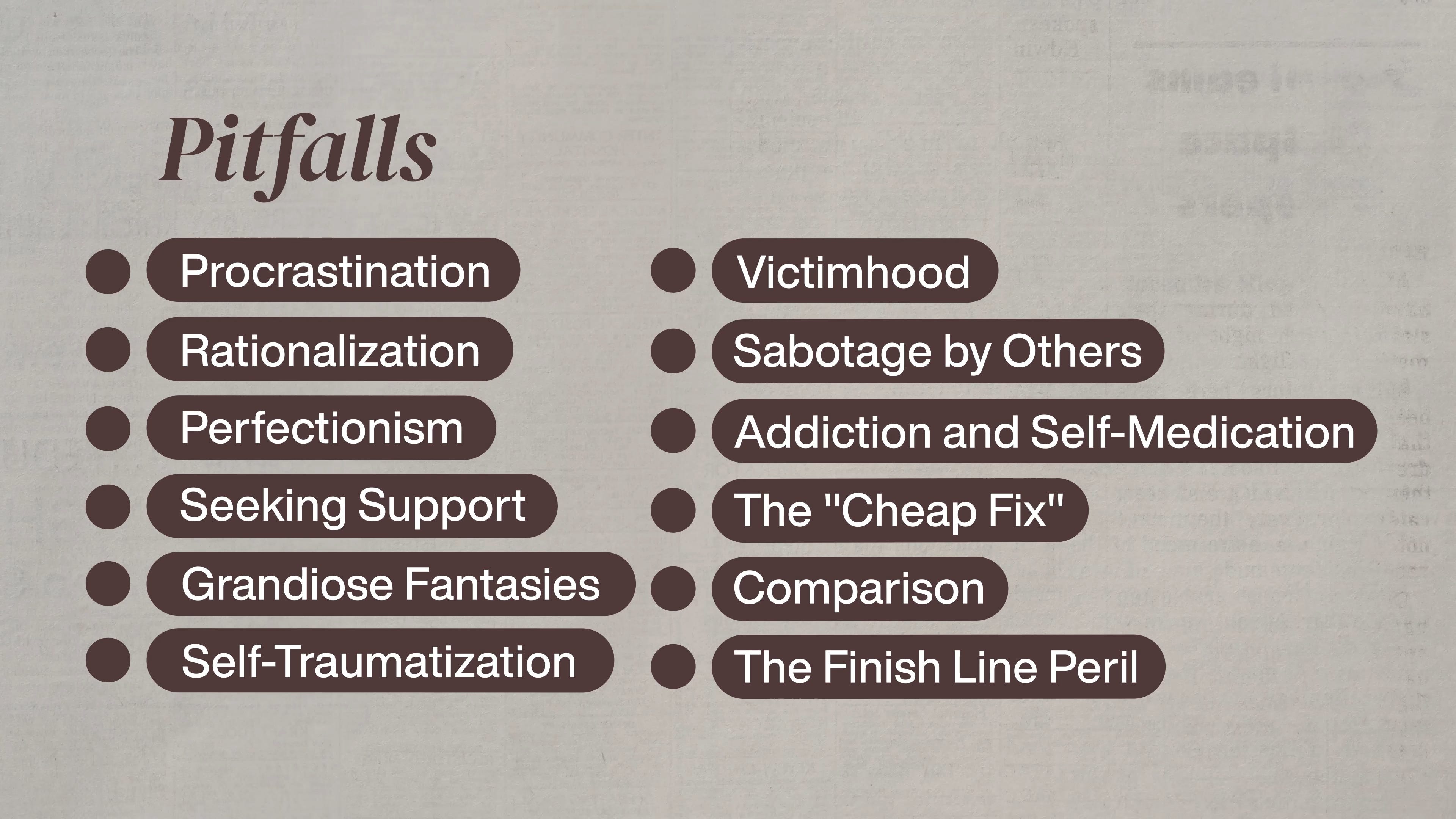
Procrastination is the most frequent pitfall because it is the easiest to rationalize. We do not tell ourselves we will never do the work; instead, we simply say we will start tomorrow, allowing the delay to become a permanent habit.
Resistance employs “rationalization“, providing plausible justifications—such as a sick family member or a busy schedule—to keep us from feeling the shame of our inaction. While these reasons may be true, they are still distractions from our primary calling.
Perfectionism: This manifests when an artist spends an entire day obsessing over a single paragraph or detail instead of moving the project forward. It is an ego-driven form of sabotage, and it prevents completion.
Seeking Support and Workshops: Paradoxically, seeking too much “support” from family or attending endless workshops is often a seductive form of Resistance. This is also called Mental Masturbation, or learning as a form of procrastination. It’s spending countless hours learning about the thing instead of just doing the thing, when it reality, doing the thing ends up being the only real way of learning about the thing.
Grandiose Fantasies: Spending time imagining oneself as a “star” rather than focusing on the craft is a hallmark of the amateur. The professional understands that success is a byproduct of work, not the primary focus.
Self-Traumatization (aka The “Soap Opera”): Individuals or entire families may create unnecessary drama in their personal lives—such as starting arguments or dating problematic partners—to ensure that no productive work can be accomplished.
Victimhood: Casting oneself as a victim is the antithesis of doing the work. It seeks gratification through the manipulation and attention of others rather than through honest contribution or mastery.
Sabotage by Others: When you begin to overcome Resistance, friends and family may unconsciously act out, becoming moody or accusing you of changing. This happens because your success acts as a reproach to their own unlived lives and unmet callings.
Addiction and Self-Medication: Resistance often takes the form of drugs, alcohol, or even “invented” social diseases marketed by pharmaceutical companies to blot out the soul’s call to create.
The “Cheap Fix”: Engaging in sex without love, obsessive shopping, or mindless scrolling provides immediate gratification that serves as a temporary substitute for the fulfillment of doing the work.
Comparison: Especially in the modern era of “personal branding,” looking at competitors or worrying about how others are smarter can lead to creative paralysis.
The Finish Line Peril
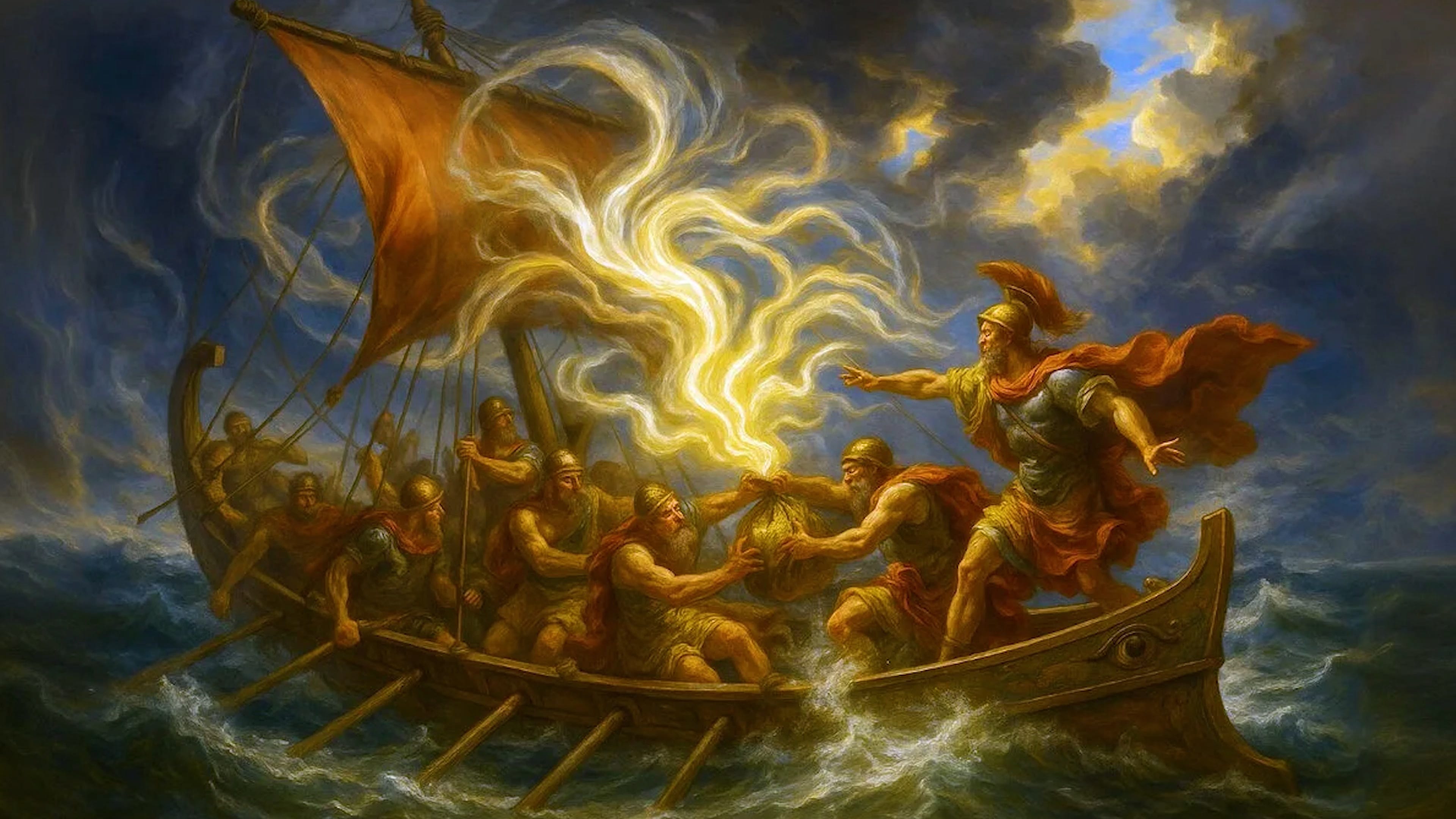
The most dangerous manifestation occurs just as a project is nearing completion. Resistance is most powerful at the finish line because it knows you are about to beat it. A famous example of this comes from the Odyssey, when Odysseus actually comes close enough to Ithaca to see the smoke from his family’s fires. Thinking he is safe, he falls asleep. While he’s asleep, his men open a sack of his that they believe contains gold. The bag actually holds the adverse winds, which burst forth and blow the ships back across the ocean, forcing Odysseus to endure years of further suffering before finally reaching home alone. When the finish line is in sight, the creator often hits a “panic button” of self-sabotage right before the end, leading to last-minute failures or abandonment of the project.
Get To Work
Ultimately, the secret to defeating this internal dragon is the simple magic of making a start, as the mundane physical act of sitting down to work triggers a mysterious process where unseen forces and the universe begin to conspire in your favor. By viewing yourself as a corporation or “Me, Inc.,” you create a healthy distance between your ego and your craft, allowing you to endure failure, criticism, and humiliation while remaining strictly focused on the mastery of your work.
There you have it, the mental model of Resistance. It comes from the book The War of Art by Steven Pressfield.
I hope you enjoyed this post. Leave a comment letting me know if you did, or didn’t.
- Dante
Relevant Links
The War of Art - Steven Pressfield (Free Audiobook)
Steven Pressfield on the Tim Ferriss Show
Steven Pressfield on the Joe Rogan Podcast
Steven Pressfield on the Rich Roll Podcast
Steven Pressfield on the Know Thyself Podcast
My Products
The Sunday Systems Weekly Planner (Free)
My Socials
YouTube. LinkedIn. Instagram. X