


You don’t need to understand Einstein’s equations to use physics to make better decisions.
Today, we’re pulling seven mental models from The Great Mental Models: Volume 2 by Rhiannon Beaubien & Shane Parrish and translating them into tools you can use in business, relationships, and daily life.
Let’s dive in.
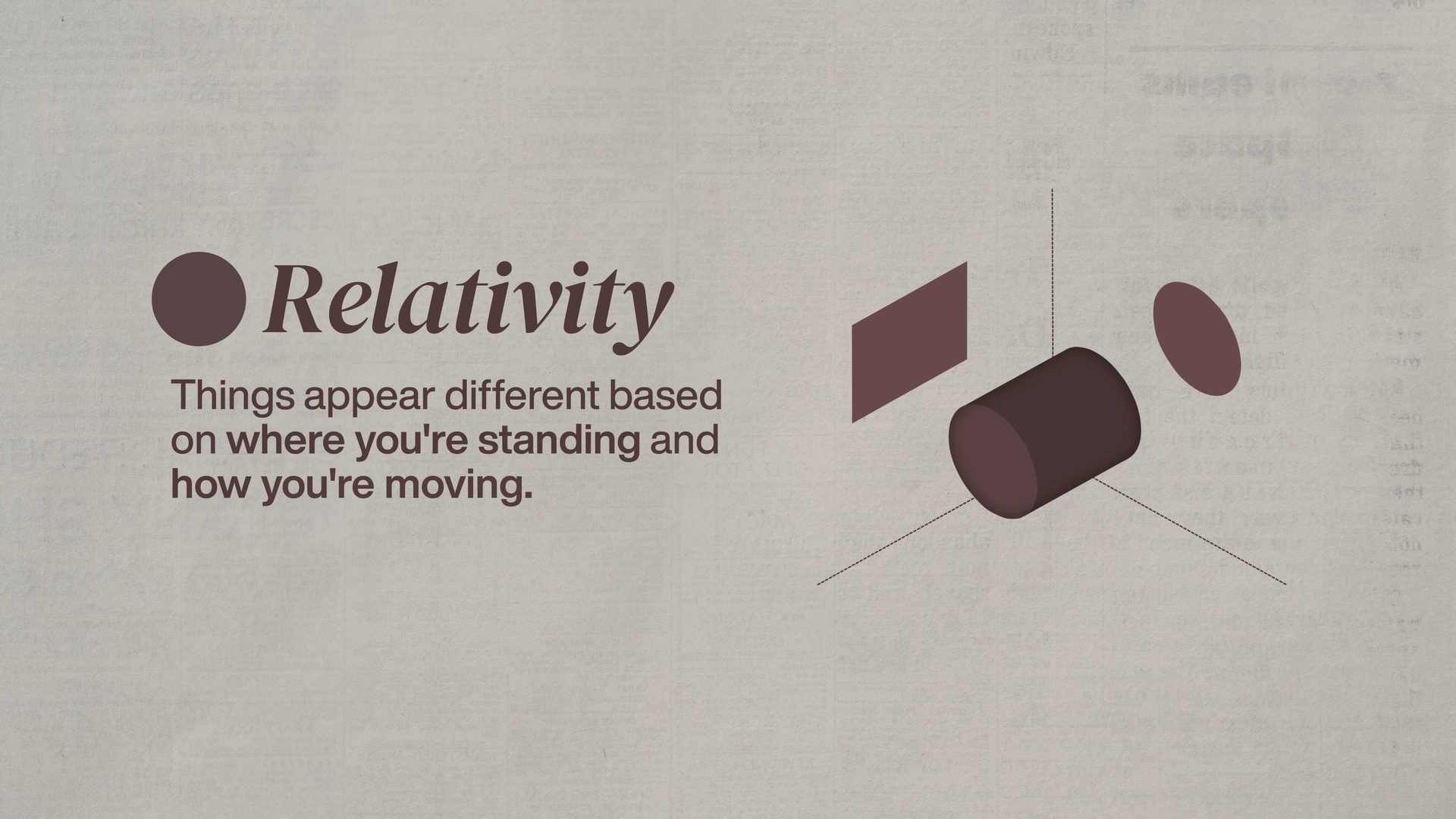
Why do two people watch the same event and walk away with two different stories?
Physics calls this relativity—the idea that there’s no single, fixed frame of reference.
The Physics
If you’re driving 60 mph next to a car also going 60 mph, it feels like it’s barely moving.
But to someone on the sidewalk, both cars are flying.
Same reality. Different perspective.
The Life Application
Imagine a basketball game. A foul may look crystal clear to one team’s fans and completely invisible to the other side. Everyone’s watching the same game, but their loyalty shapes their frame of reference.
And importantly:
Relativity is not relativism.
Some perspectives are closer to reality than others.
Isaac Asimov said it best:
“When people thought the Earth was flat, they were wrong. When people thought the Earth was spherical, they were wrong. But thinking the Earth is spherical is as wrong as thinking it’s flat—that’s wronger than both of them.”
(And just for accuracy: the Earth is an oblate spheroid—a slightly squished sphere.)
Relativity teaches us:
Perspective shapes perception.
Which leads naturally into our next model—how our actions shape the world around us.
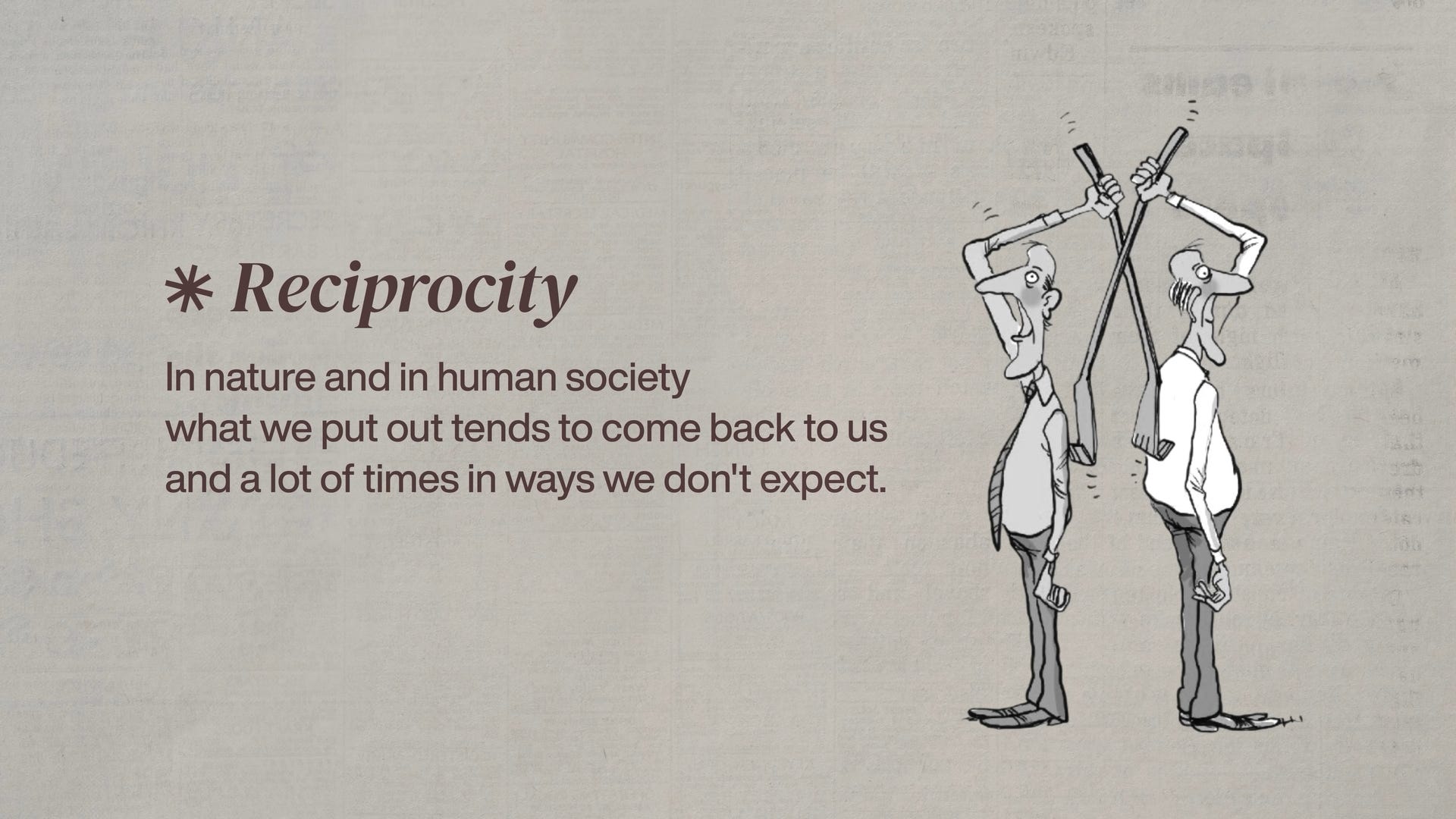
When you act on something, it acts back.
In physics, this is Newton’s Third Law.
In life, it’s called reciprocity.
The Physics
Push water backward with an oar → water pushes the boat forward.
Action → reaction.
The Life Application
A friend buys your coffee → you feel compelled to return it.
A grocery store gives you a free sample → you’re more likely to buy.
In relationships: if you want an amazing partner, start by being one!
Reciprocity teaches us:
What you send out tends to return—often amplified.
But the return is never perfect. Some energy always leaks.
And that brings us to…
The Physics
A hot cup of coffee cools because the heat spreads into the surrounding air molecules.
The energy doesn’t disappear—it just becomes much less concentrated.
Physicist Helen Czerski puts it beautifully:
“The physical world only has one destination: equilibrium.”
The Life Application
Jeff Bezos warns about equilibrium in business and life:
“The world wants you to be typical — in a thousand ways it pulls at you. Don’t let it.”
Systems drift toward disorder unless energy is added.
This is true for:
your career
your fitness
your relationships
your creative projects
Thermodynamics teaches us:
If you stop putting energy in, things slowly return to their original state.
And that sets up a powerful contrast with our next model…
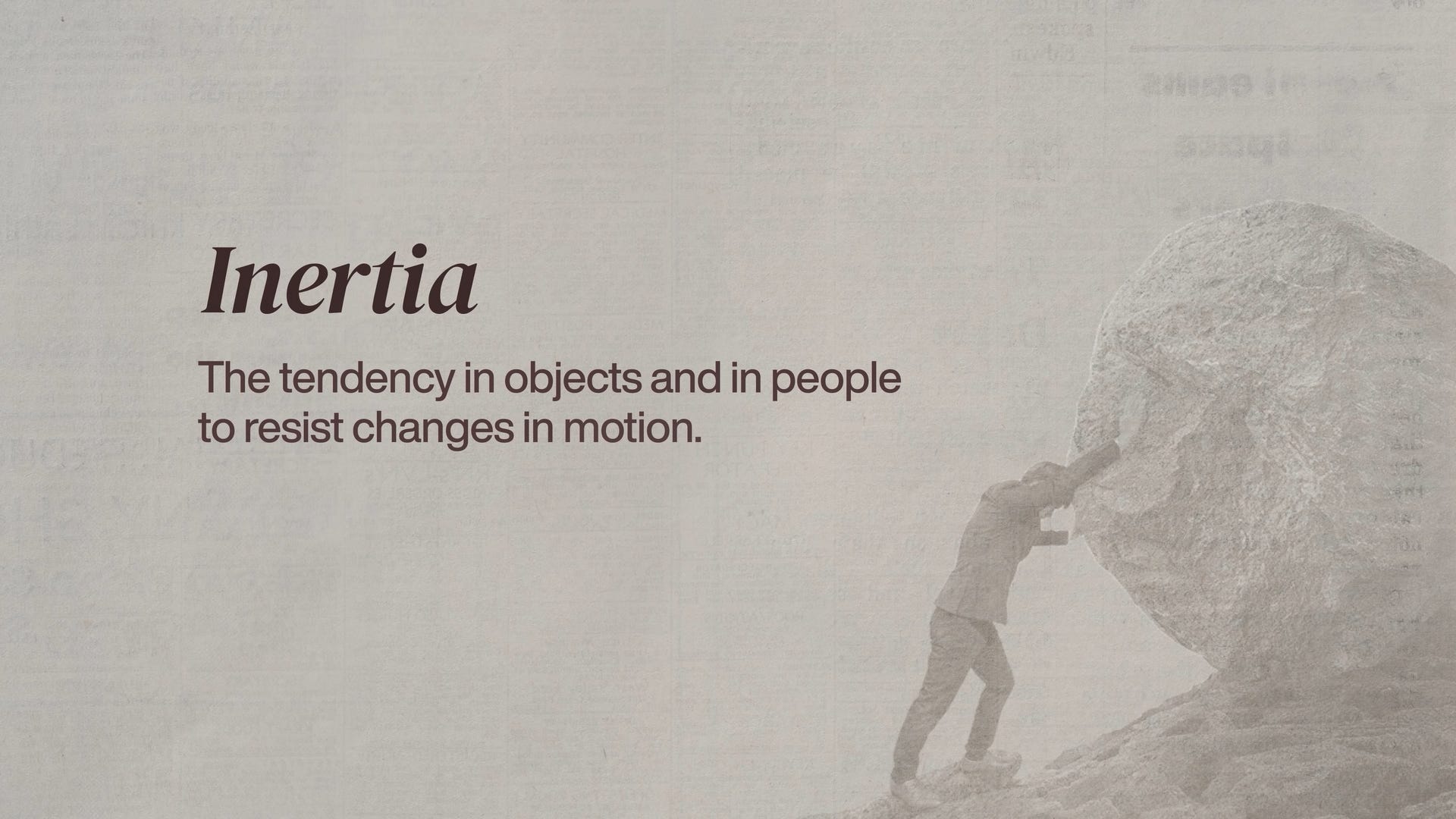
Why is it so hard to start…but much easier to keep going once you have momentum?
This is inertia—the tendency to resist changes in motion.
The Physics
A boulder is hardest to move at the start.
Once rolling, it takes far less force to keep it moving.
The Life Application
Smoking is the classic societal example.
By the 1950s, the evidence was clear: cigarettes cause cancer.
But billions of dollars, cultural momentum, and addiction kept the boulder rolling for decades.
It took generations of lawsuits and public health campaigns to even slow it down. And I’m just talking about the United States. It’s hard to stop something that is already in motion.
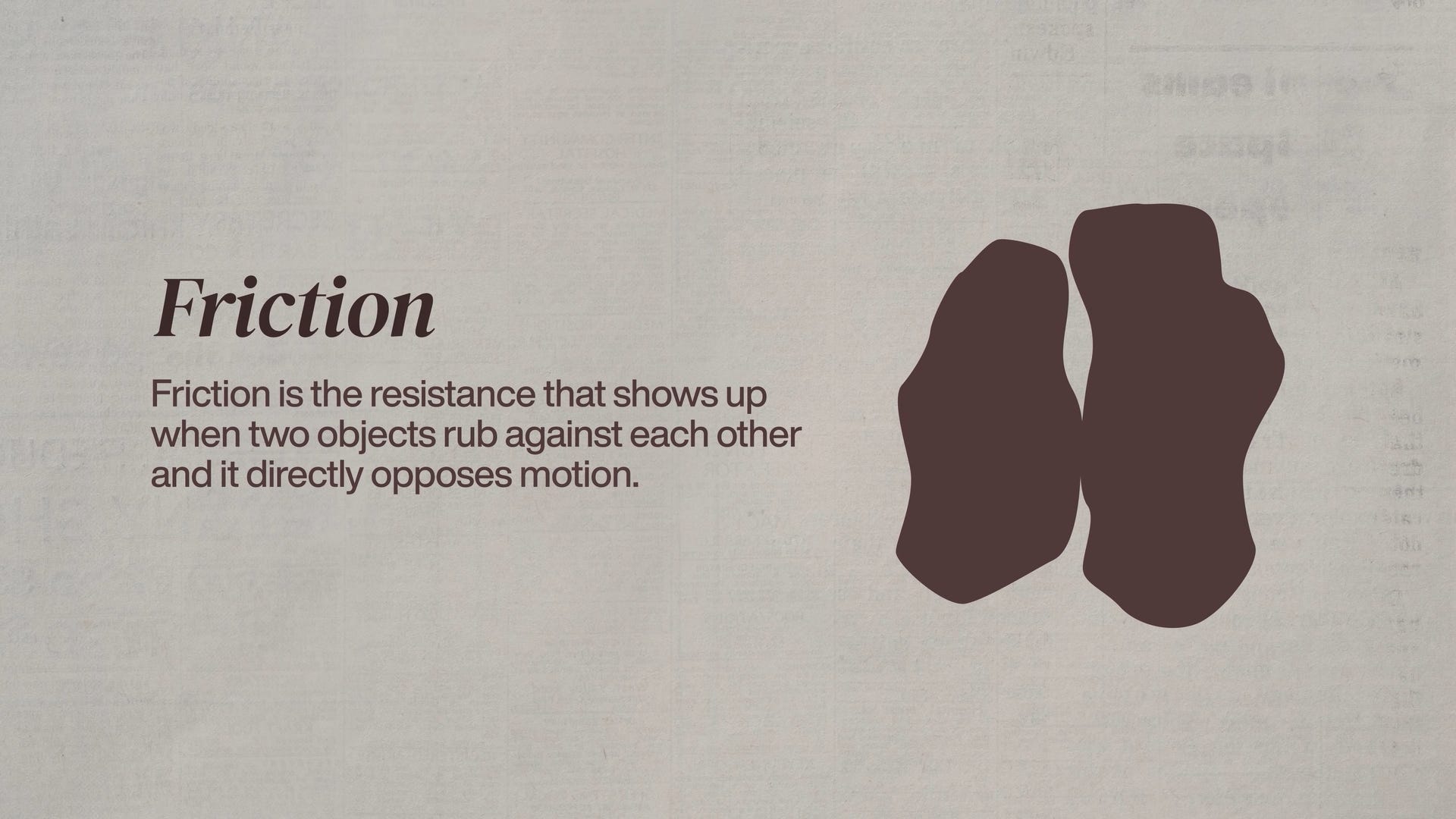
Friction = resistance between solid surfaces.
Slide a box across smooth Walmart floors → easy.
Slide it across the pavement → difficult.
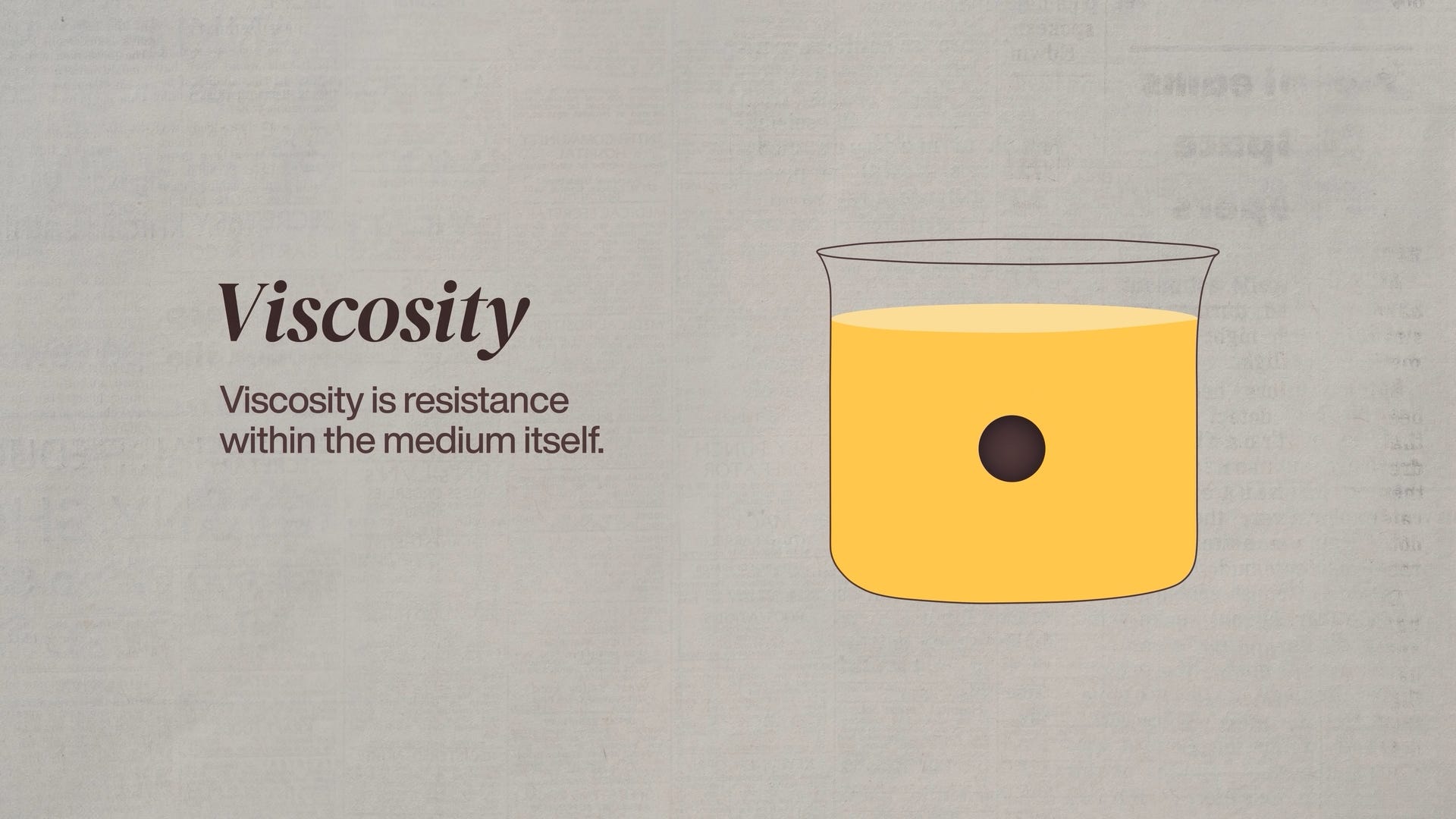
Viscosity = resistance within a fluid.
Stir water → easy.
Stir honey → slow and exhausting.
The Life Application
Friction in business:
regulations, approvals, paperwork, endless meetings.
Viscosity in business:
slow information flow, siloed teams, too many layers.
A great example:
Tesla once housed engineers and designers in separate buildings.
Information flowed with a high viscosity.
Elon Musk’s fix?
Move them next to each other.
Suddenly, feedback was instant. If a design sucked, the engineer could turn to the designer and ask, “Why the fuck did you make it this way?”
Friction & viscosity teach us:
Identify where energy is being wasted in the transfer—and eliminate the drag.
When you do that, you unlock our next model…
“If a man does not know to what port he is steering, no wind is favorable.”
— Seneca
Many people (myself included) thought that velocity was synonymous with speed. This is incorrect.
Velocity = Speed + Direction.
The Physics
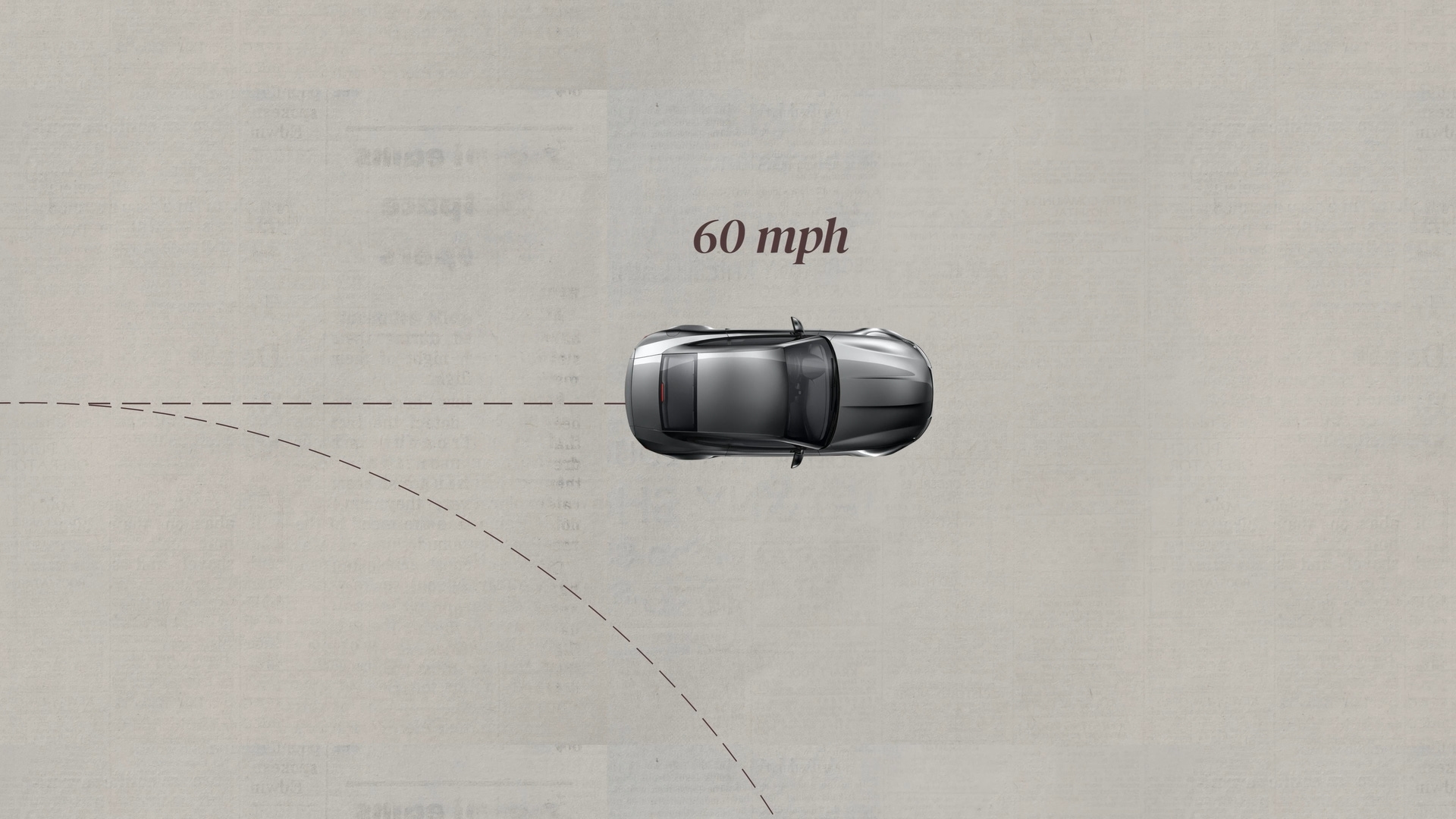
A car going 60 mph with even a slight turn is really just driving in a big circle.
A car going 60 mph straight has true velocity. It has both speed and direction.
The Life Application
Being busy feels productive. But this is often a trap.
“Being busy is a form of laziness—lazy thinking and indiscriminate action.”
– Tim Ferriss, The 4-Hour Workweek
Making decisions aligned with your mission is velocity.
Velocity teaches us:
You need a destination to measure progress.
And once you have one… you can multiply your force toward it.
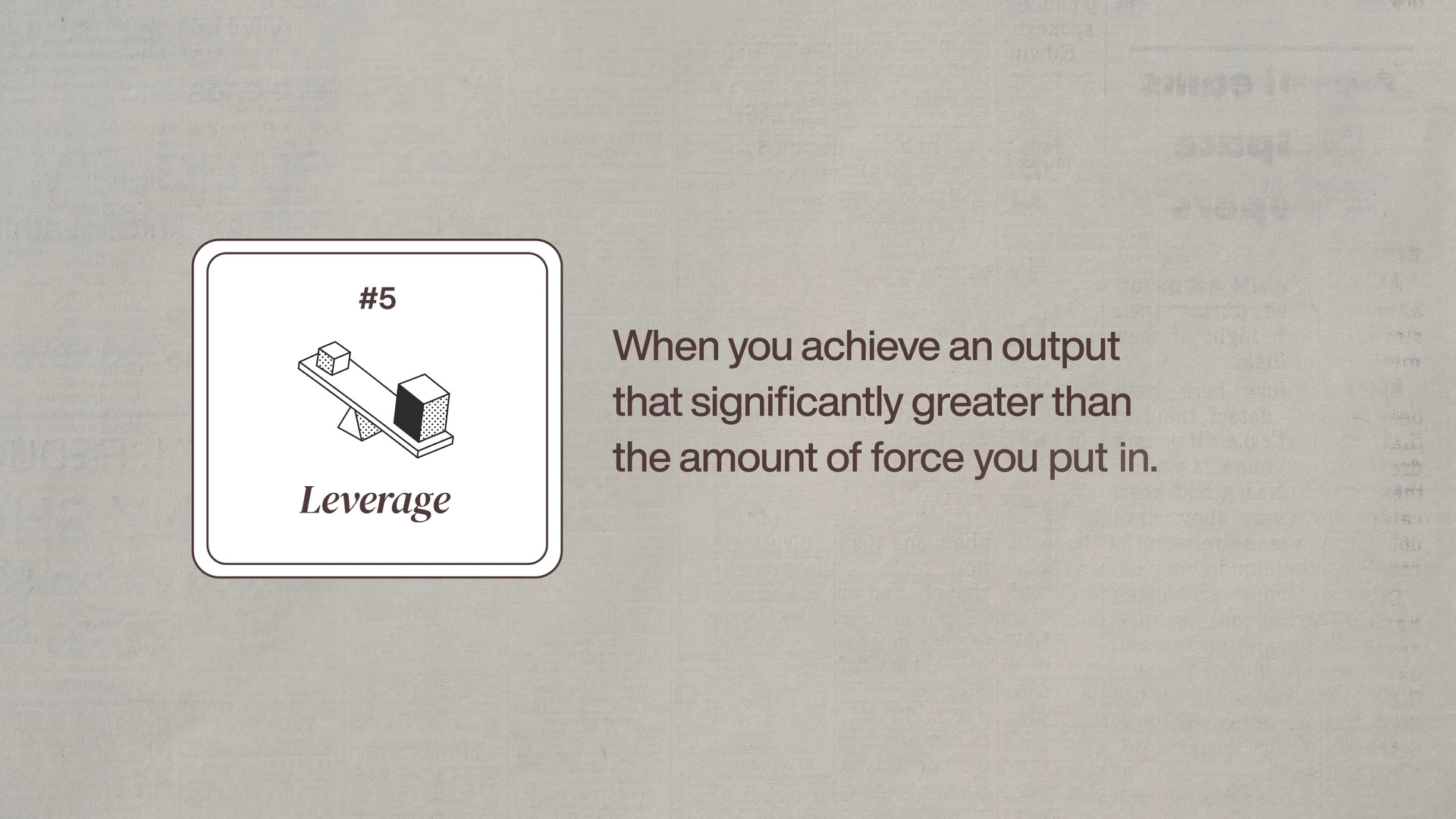
“Give me a lever long enough, and a place to stand, and I will move the world.”
— Archimedes
The Physics
A lever multiplies your input force.
Crowbars. Scissors. Pliers. Wheelbarrows. They are all examples of levers.
Same effort → dramatically bigger output.
Modern Leverage
Media is the 21st-century lever. Same with code.
You can record one video, write one article, or hit “publish” once—
and reach millions while you’re asleep.
You can write one script, ship one product, or launch one app—and it can run a thousand times while you’re off doing something else.
Human effort doesn’t scale quite as easily as these forms of leverage.
Leverage teaches us:
Small, well-placed effort beats unlimited brute force.
If you enjoyed this breakdown, I made a full video unpacking these ideas with visuals and examples.
I also covered the first Great Mental Models book in a video that’s now crossed 250,000 views.

Get my Sunday Systems Worksheet (free download)
I guarantee you’ll get 50% more done in a week