


Chapters
(00:00) What Do They Fear?
(1:14) Elon Musk - The Candlelight of Consciousness
(6:04) Jensen Huang - 30 Days From Bankruptcy
(10:04) Sam Altman - Concentration of Power
(14:08) Granola, the AI meeting assistant
(15:20) Dario Amodei - Catastrophic Misuse
(18:18) Mark Zuckerberg - Don’t Get Left Behind
When you and I study the world’s greatest Doers, we usually focus on their vision and inspiration.
We look at the incredible hurdles they overcame, and the delusional optimism it took to envision such a future and then go create it.
But after spending the week digging through their interviews, essays, and biographies for this episode, I came away with the opposite conclusion.
There is just as much to learn from what they fear.
Fear is an innate driving force behind much of human ambition. Each of these five tech giants has a different core fear, and that specific fear dictates how they build.
Let’s take a closer look.
Elon Musk - The Candlelight of Consciousness
Between 2006 and 2008, SpaceX launched its first rocket, the Falcon 1, three times. All three blew up.
Musk scraped together enough capital for one final launch. On September 28, 2008, Flight 4 reached orbit. Weeks later, NASA awarded SpaceX a $1.6 billion contract. This is just one of many near-death experiences for SpaceX.
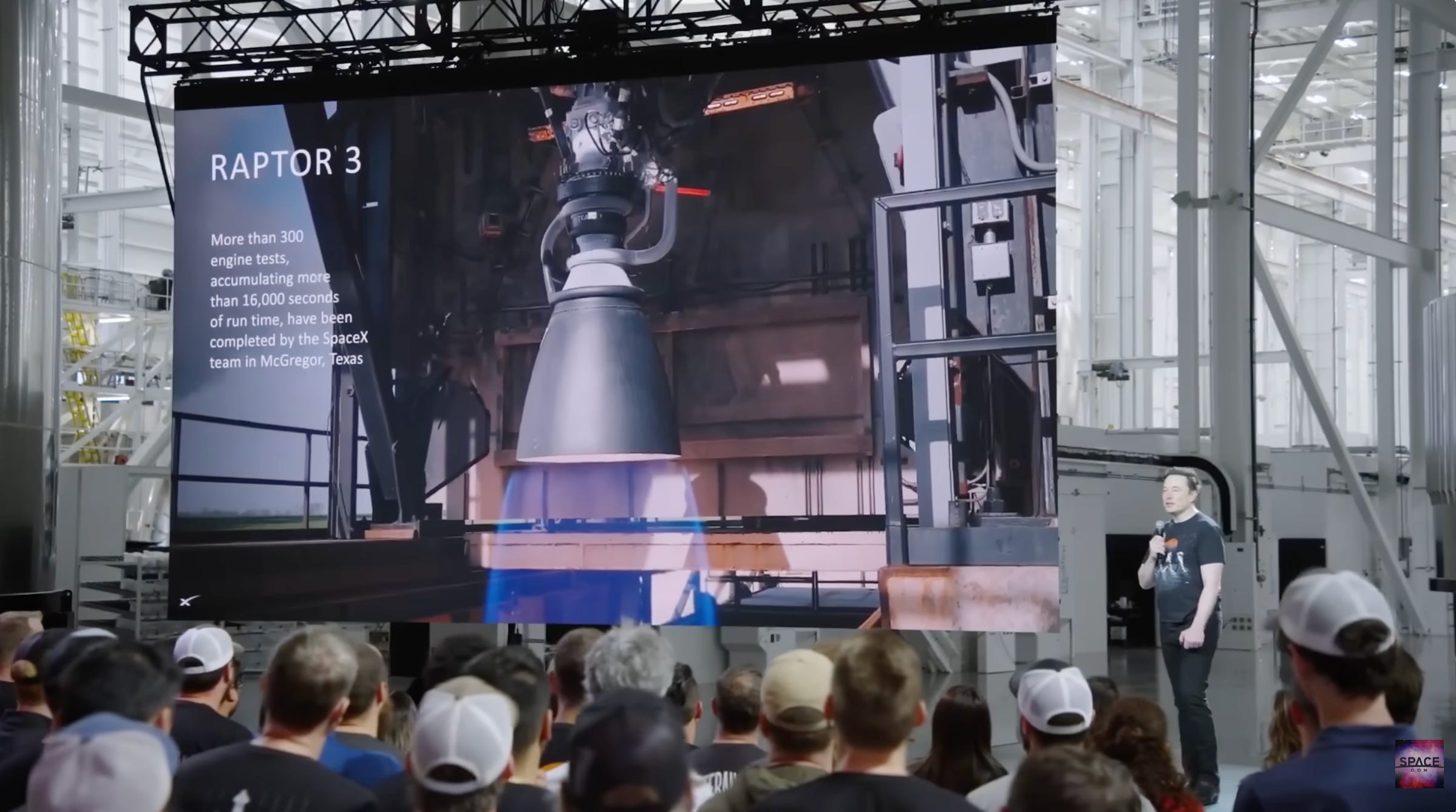
So honestly, why bet the farm on rockets?
Musk views human civilization as incredibly fragile in the grand scheme of the universe.

His conclusion is that civilizations destroy themselves or get wiped out before they become multi-planetary. Look at what happened to the dinosaurs. With no backup planet, we are one mistake away from extinction.
And, he doesn’t think this chance lasts forever.
“This is the first time in the history of earth that it’s been possible for life to extend beyond earth. That window is open. Now, it may be open for a long time or it may be open for a short time and it may be open now and then never open again. So I think the smart move here is to make life multi-planetary while it’s possible to do so.” - Elon Musk
He estimates a self-sustaining city on Mars requires one million to ten million tons of cargo delivered to the Martian surface. That single number explains why SpaceX scrapped expendable rockets to bet everything on a fully reusable Starship designed for ten thousand flights. It also explains why he took this bet, after acknowledging that the odds of success were slim.
“When something is important enough, you do it even if the odds are not in your favor.” - Elon Musk
Jensen Huang - You’re Going Out of Business
Today, Nvidia is the most valuable company on Earth. But for thirty years, Jensen Huang has opened internal meetings with the same five words:
“Our company is thirty days from going out of business.”
On the Joe Rogan Experience #2422 Jensen says that every day he wakes up with the feeling that Nvidia will be out of business soon. He’s used this for 33 years. He claims that he’s not ambitious. He’s just trying to survive. He doesn’t let success dull his survival instincts.
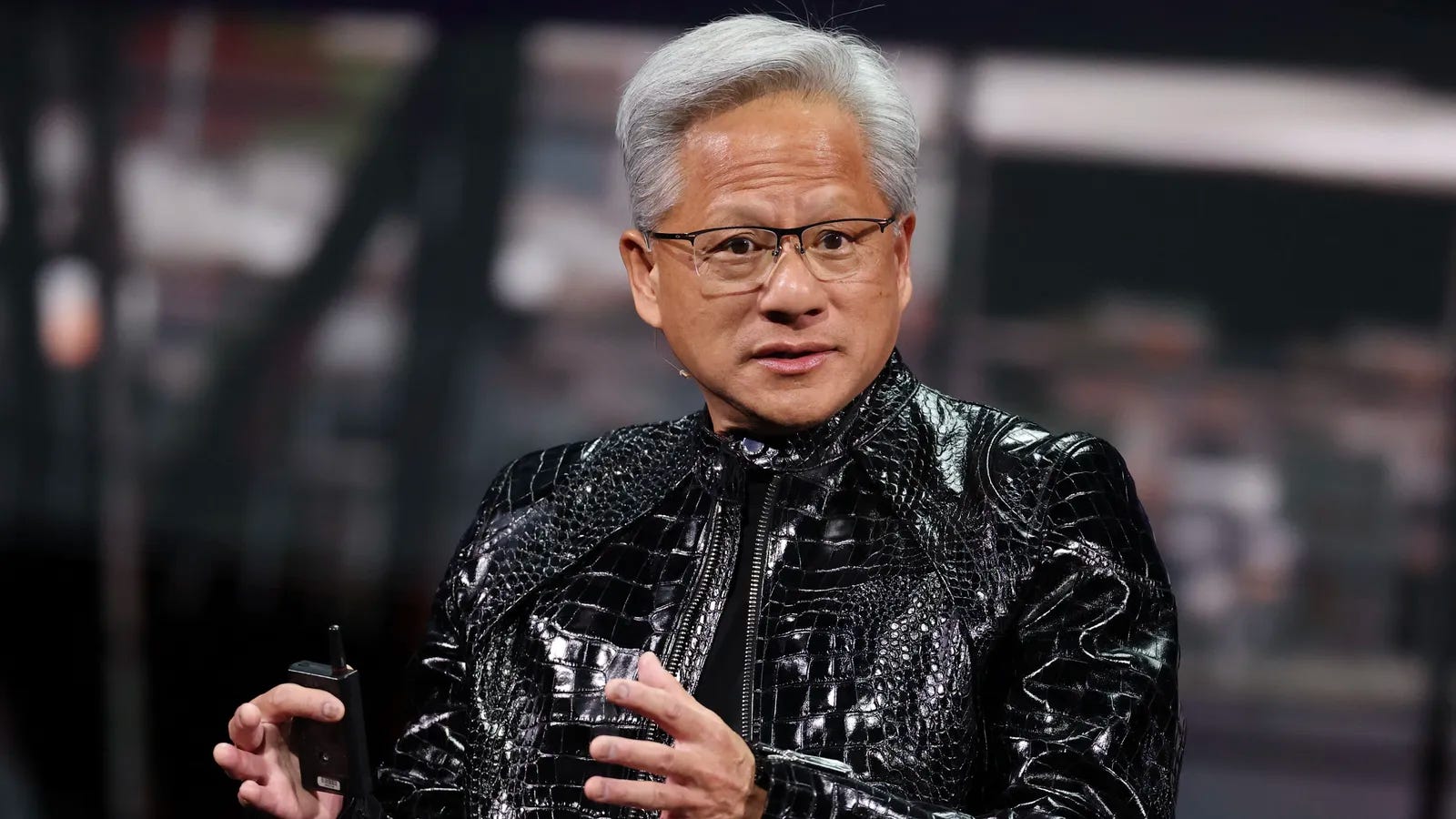
Let’s go back in time to the beginning of Nvidia. Two years after its founding, Huang signed a contract with Sega to build the graphics chip for the Dreamcast console. Halfway through development, Nvidia realized their architecture was completely wrong.
If Nvidia finished the Sega contract, they would build an obsolete chip. If they stopped, they would go bankrupt immediately.
Jensen flew to Japan, walked into the office of Sega’s CEO, Irimajiri-san, and told him the truth: the chip would not work, Sega needed to find another partner, and Nvidia still needed Sega to pay the remaining $5 million on the contract or Nvidia would die. Instead of suing him, Irimajiri-san turned the $5 million into an equity investment that kept Nvidia alive on fumes for six more months until their product finally succeeded.
His biographer Stephen Witt described Huang as being unusually driven by negative emotions—fear of failure, paranoia about competition, and guilt about letting his employees down. Jensen becomes uncomfortable when things are going well and operates as if the company is always on the brink of extinction.
A few years ago, Jensen was the commencement speaker at Stanford and offered them the following advice.
“For anyone who wants to build something great, I wish upon you ample doses of pain and suffering.” - Jensen Huang
Jensen channels his fear of extinction and manipulates it in order to get the best from himself.
Sam Altman - Concentration of Power
In 2015, Sam was running Y Combinator, and he wrote a blog post with a heading in capital letters: “WHY YOU SHOULD FEAR MACHINE INTELLIGENCE.“
I’ll read you the first line: “Development of superhuman machine intelligence is probably the greatest threat to the continued existence of humanity”
This doesn’t necessarily mean an evil AI, Sam says:
“A more probable scenario is that it simply doesn’t care about us much either way, but in an effort to accomplish some other goal (most goals, if you think about them long enough, could make use of resources currently being used by humans) wipes us out. Certain goals, like self-preservation, could clearly benefit from no humans. We wash our hands not because we actively wish ill towards the bacteria and viruses on them, but because we don’t want them to get in the way of our plans.” - Sam Altman
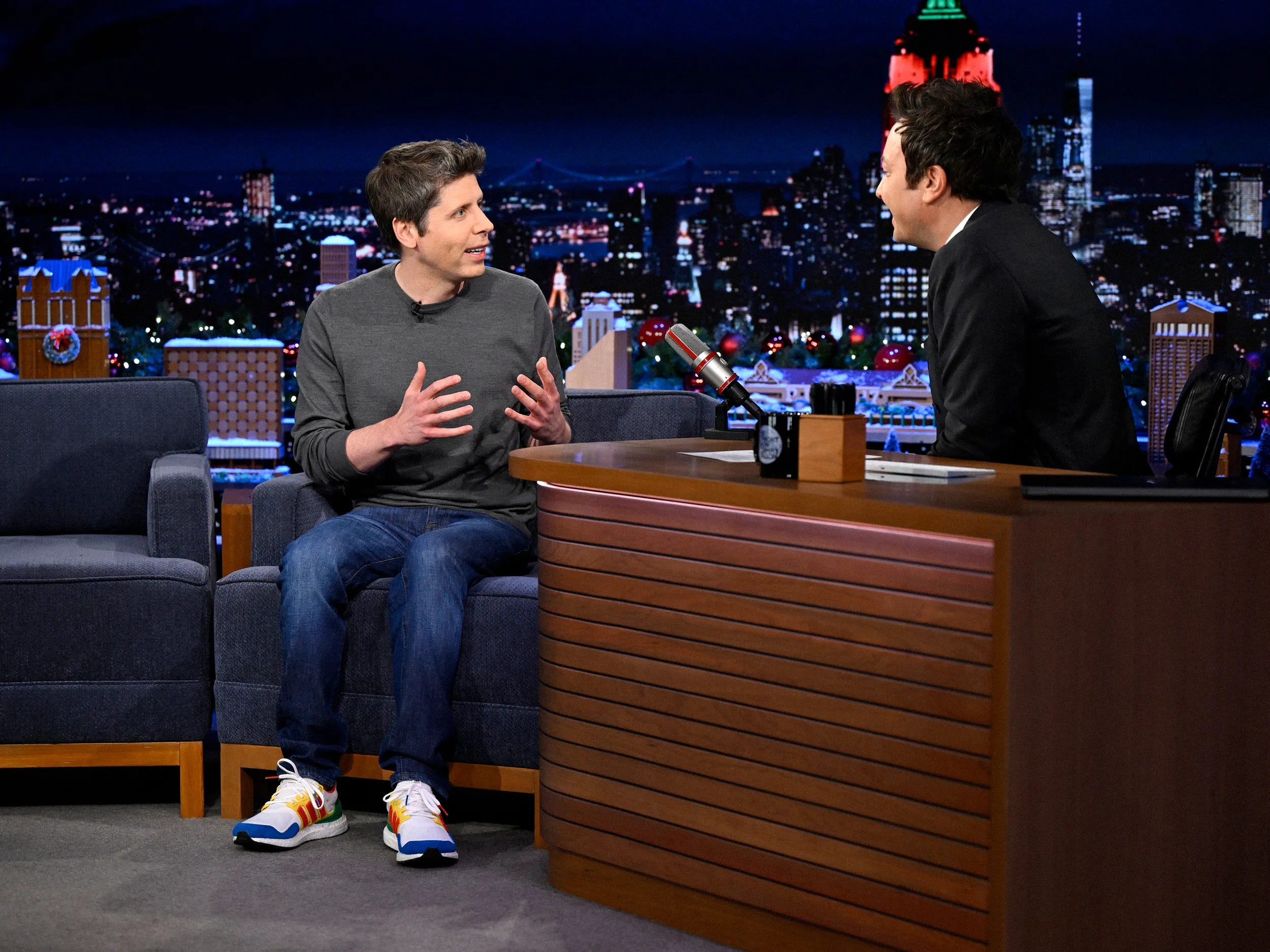
So let me name the fear plainly. Altman is afraid superhuman AI ends or takes over humanity’s future. And there’s a second layer to this, which is the fear that this power ends up in one person’s hands.
However, this stated fear created the sharpest contradiction in modern tech. In November 2023, OpenAI’s nonprofit board fired Altman on a Friday afternoon, claiming he was “not consistently candid in his communications with the board.”
By Monday, after roughly 95 percent of OpenAI’s employees signed a letter threatening to quit and join him at Microsoft, Altman was back in the CEO chair, and the board that fired him was replaced.
There’s a tension here. Staying relevant enough to be a big player also concentrates power in the ways he used to warn about. The person most worried about someone else steering the future often ends up fighting hardest to hold the wheel himself.
Dario Amodei - Catastrophic Misuse
Before founding Anthropic in January 2021, Dario Amodei was VP of Research at OpenAI, leading the teams that built GPT-2 and GPT-3. He and his sister Daniela left with a core group of researchers because they believed the company was moving too fast and treating safety as an afterthought.
On Lex Fridman’s podcast and in his April 2025 essay The Urgency of Interpretability, Amodei breaks his fear into two concrete buckets:
Catastrophic misuse: bad actors using frontier models to amplify destruction in cyber, biological, radiological, or nuclear domains.
Autonomy without understanding: deploying models whose internal reasoning we cannot read or inspect until they are already too capable to control.
“People outside the field are often surprised and alarmed to learn that we do not understand how our own AI creations work. They are right to be alarmed.” - Dario Amodei
Notice how Amodei acted on that fear. He did not leave the industry to protest from the sidelines. He concluded that if safety-conscious researchers step off the field, the builders with the least caution win by default. You can either be a spectator or a participant.
If you are afraid of how a technology will be built, build at the frontier yourself and set a public standard that forces your competitors to match you.
So Anthropic builds frontier models from the inside while instituting a Responsible Scaling Policy: hard capability thresholds where a model cannot ship until its defenses are proven first.
Mark Zuckerberg - Never Be Late Again
Mark Zuckerberg’s fear is simpler and more personal than cosmic extinction or rogue superintelligence. He is terrified of being left behind… again.
Look at the scars across Meta’s history:
Mobile (2010 to 2012): Zuckerberg bet Facebook on HTML5 web wrappers instead of native iOS and Android apps. By 2012, he admitted onstage that betting on HTML5 was the “biggest strategic mistake” the company ever made, and spent two years rebuilding for mobile while Apple and Google took control of the phones underneath him.
Messaging (2013 to 2014): WhatsApp was growing faster than Facebook Messenger. Zuckerberg paid $19 billion to acquire WhatsApp so he would be competitive in messaging.
Short-form video (2020 to 2022): When TikTok exploded, Zuckerberg admitted he missed it at first because he “didn’t think TikTok was social.” Only later did Meta pivot hard into Reels, turning it into a $50 billion-plus annual run rate business.
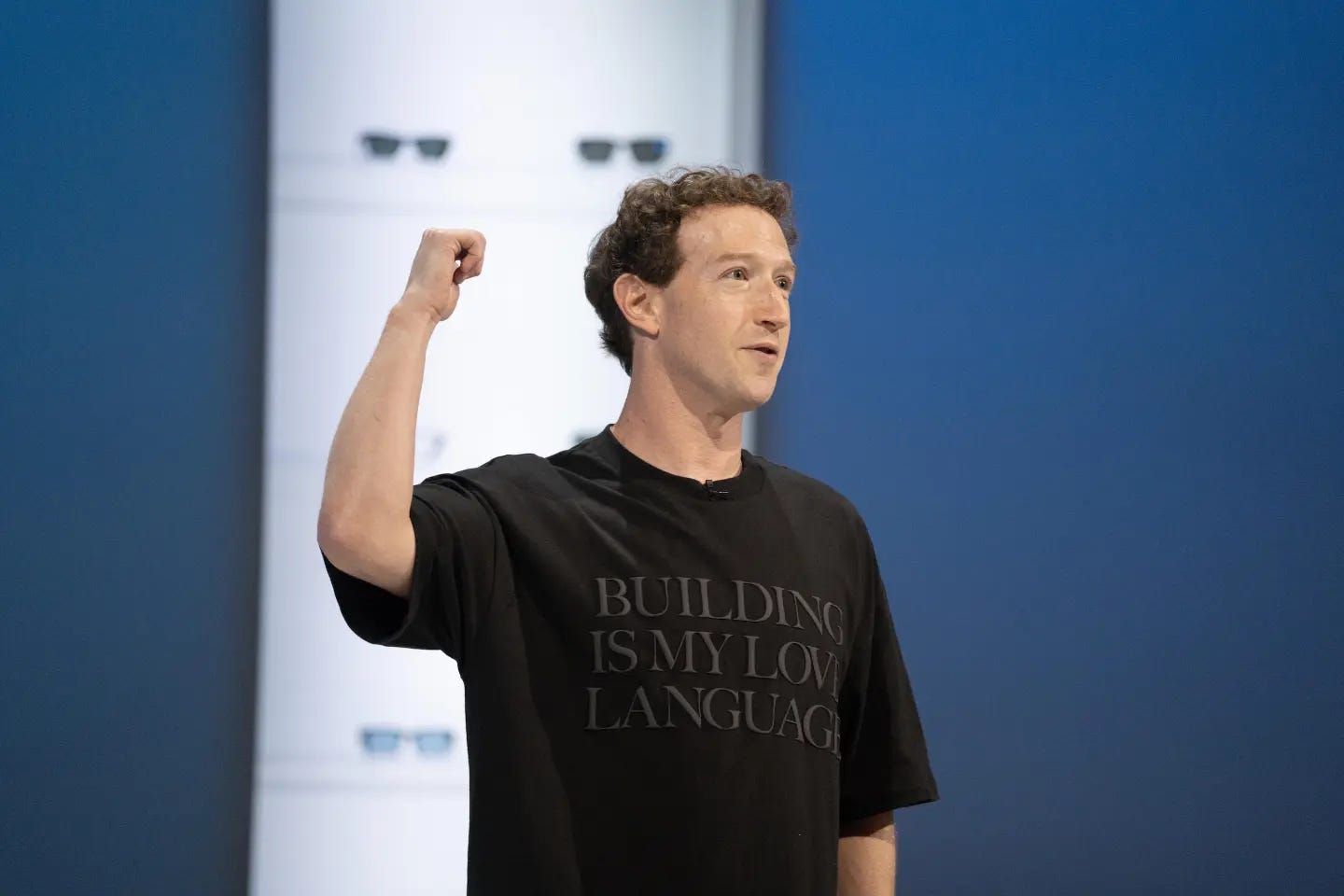
So how is this fear influencing the way Zuck makes decisions going forward?
“If we misspend a couple of hundred billion dollars, I think that is going to be very unfortunate, obviously. But what I’d say is I actually think the risk is higher on the other side.” - Mark Zuckerberg
In 2022, when Meta was racing to catch up with Reels, it didn’t have enough GPUs to train the recommendation models it needed. Zuckerberg said in an interview with Dwarkesh Patel, “We have to make sure that we’re never in this situation again. So let’s order enough GPUs to do what we need to do on Reels... But let’s also double that.”
By the end of 2024, Zuckerberg said Meta’s fleet would reach about 350,000 GPUs, used to train its Llama models.
Judging by the early success of Meta’s Muse, it seems Mark was right this time.
Anyways, I hope this was helpful. Cheers!
- Dante
Sources


